feedzop-word-mark-logo
searchLogin
Feedzop
homeFor YouUnited StatesUnited States
You
bookmarksYour BookmarkshashtagYour Topics
Trending
Terms of UsePrivacy PolicyAboutJobsPartner With Us

© 2026 Advergame Technologies Pvt. Ltd. ("ATPL"). Gamezop ® & Quizzop ® are registered trademarks of ATPL.

Gamezop is a plug-and-play gaming platform that any app or website can integrate to bring casual gaming for its users. Gamezop also operates Quizzop, a quizzing platform, that digital products can add as a trivia section.

Over 5,000 products from more than 70 countries have integrated Gamezop and Quizzop. These include Amazon, Samsung Internet, Snap, Tata Play, AccuWeather, Paytm, Gulf News, and Branch.

Games and trivia increase user engagement significantly within all kinds of apps and websites, besides opening a new stream of advertising revenue. Gamezop and Quizzop take 30 minutes to integrate and can be used for free: both by the products integrating them and end users

Increase ad revenue and engagement on your app / website with games, quizzes, astrology, and cricket content. Visit: business.gamezop.com

Property Code: 5571

Home / Weather / Arctic Vortex Unleashes Fury: US Faces Crippling Winter Storm

Arctic Vortex Unleashes Fury: US Faces Crippling Winter Storm

26 Jan

•

Summary

  • A severe winter storm threatened states from Texas to New England in late January 2026.
  • The polar vortex's southward stretch created ideal conditions for severe winter weather.
  • Warming climate may contribute to more intense, though less frequent, winter storms.

Arctic Vortex Unleashes Fury: US Faces Crippling Winter Storm

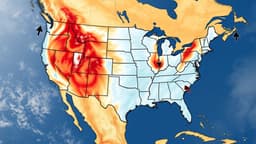
A significant winter storm gripped the central and eastern U.S. in late January 2026, bringing freezing rain, sleet, and snow. The extreme weather prompted several governors to declare states of emergency as dangerous conditions and bitter cold were predicted to persist.

Scientists explain that this severe weather is linked to the polar vortex, a circulation of air around the North Pole. When the stratospheric polar vortex stretches southward, it can interact with the jet stream, exacerbating its dips and intensifying winter storms.

Despite overall global warming and decreasing snow amounts, research indicates that cold events, while rarer, may become more severe. Climate change potentially disrupts the polar vortex and increases atmospheric moisture, contributing to more intense storms. Additionally, warmer temperatures increase the likelihood of precipitation falling as freezing rain or sleet rather than snow.

Disclaimer: This story has been auto-aggregated and auto-summarised by a computer program. This story has not been edited or created by the Feedzop team.
The severe winter storm is linked to the southward stretch of the stratospheric polar vortex, which creates conditions for intense winter weather when interacting with the jet stream.
Yes, while overall snow may decrease, research suggests that climate change may contribute to more intense winter storms, potentially increasing the likelihood of freezing rain and sleet.
The polar vortex, particularly when it stretches southward, can create ideal conditions for severe winter weather by influencing the jet stream and exaggerating its north-south swings.

Read more news on

Weatherside-arrow
trending

Ohio snow emergency declared

trending

TikTok down in United States

trending

Andreeva matches Venus Williams' feat

trending

Warrington Hospital baby death

trending

Alexander Zverev advances in Australia

trending

Oilers host Capitals

trending

Duke Energy assists Carolinas

trending

London celebrates Chinese New Year

trending

Liza Minnelli defends AI use

You may also like

Arctic Chill: Climate Change Fuels Extreme Cold?

23 Jan • 24 reads

article image

Millions Hit by Arctic Blast

24 Jan • 19 reads

article image

D.C. Braces for Deep Freeze, Potential Weekend Snowstorm

21 Jan • 45 reads

article image

Florida Braces for Rare Snowfall This Weekend

14 Jan • 72 reads

article image

Northeast Braces for Winter Storm and Arctic Blast

13 Dec, 2025 • 177 reads

article image