Home / Weather / Wet Winter Ahead for Mississippi? Vortex & El Niño Clash
Wet Winter Ahead for Mississippi? Vortex & El Niño Clash
30 Sep
Summary
- Polar vortex strengthening while strong El Niño develops.
- Mississippi anticipates a wet winter across most of the state.
- Forecasts from NOAA, Old Farmer's Almanac, and Farmers' Almanac differ.
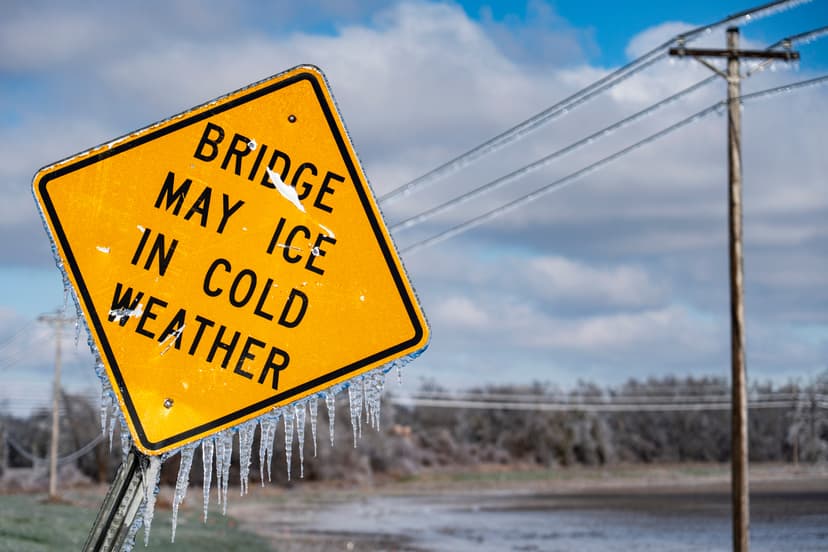
Mississippi's upcoming winter season is shaped by two significant atmospheric phenomena: a strengthening polar vortex and a developing strong El Niño.
Forecasters from NOAA, Old Farmer's Almanac, and Farmers' Almanac project different temperature ranges for Mississippi. However, they largely agree on one prediction: a wet winter is highly probable for the state.
The National Weather Service predicts warmer-than-average fall temperatures for northern Mississippi, with average temperatures expected elsewhere. Most of the state is likely to experience above-normal rainfall, with coastal counties potentially receiving up to 60% more rain than usual.
The Old Farmer's Almanac suggests above-normal temperatures for the Deep South, with some snow chances in northern areas and wetter conditions in the south. Its forecast highlights early January and mid-February as potential snow periods, with the coldest temperatures anticipated in mid-December, early January, and early February.
Farmers' Almanac forecasts a cold and stormy winter for Mississippi and the Gulf Coast, predicting an active storm pattern with above-normal precipitation extending from California eastward to the Southeast.
The polar vortex is a large circulation of cold air and strong winds over the Arctic. When stable, it keeps Arctic air contained. A weakened or displaced vortex can allow cold air to move south, but its effects are not guaranteed to reach the U.S. Similarly, a strong El Niño can influence atmospheric circulation and the jet stream, potentially interacting with the polar vortex. Current models suggest the polar vortex may weaken as winter progresses, particularly in January and February, but its impact on U.S. weather remains uncertain.
Astronomical winter begins on December 21, 2026, with the winter solstice, and ends on March 20, 2027. Meteorological winter commenced on December 1, 2026, and concludes at the end of February 2027.


