Home / Weather / Australia Braces for Year's Rain After Extreme Heat
Australia Braces for Year's Rain After Extreme Heat
23 Feb
Summary
- Inland regions face potential year's worth of rain in a week.
- Severe weather warnings issued for multiple Australian states.
- Flash flooding risk high for SA, QLD, NSW, and VIC communities.
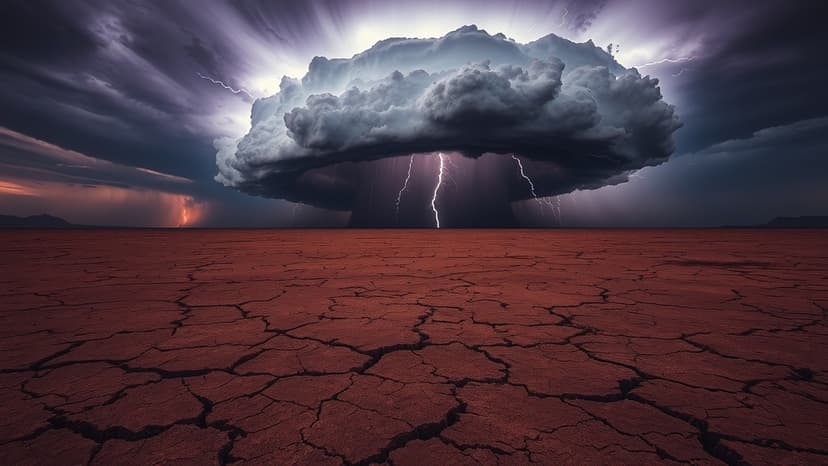
Parts of inland South Australia, Queensland, and New South Wales are at risk of receiving a year's average rainfall within a week, following a period of extreme heat. The Bureau of Meteorology has issued severe weather warnings for Tuesday, predicting heavy and potentially intense rainfall across north-western NSW, central and northern Victoria, north-eastern SA, and south-western Queensland. Some areas in north-eastern SA and north-western NSW could experience 200-300mm of rain, while inland regions might receive 100-200mm. Outback towns like Marree, which recorded only 37mm in 2025, could exceed their annual average of 142mm. This forecast follows five consecutive days of temperatures at least 48C in Marree. Communities such as Tibooburra and Birdsville are also anticipated to receive significant rainfall. Separate showers are expected in Sydney from late Wednesday to Sunday, a period typically wet for the city. Heavy rain and flooding have already impacted the Indian Pacific tourist train, washing away up to 100m of track, causing service disruptions and necessitating rerouting. The Australian Rail Track Corporation is assessing damage to the East West rail line, with repairs potentially taking over a week, compounded by another forecast weather system later in the week. Several outback roads, including the Birdsville Track, were closed on Monday. While disruptions and potential isolation are concerns, the rainfall is also beneficial for replenishing water sources. Kati Thanda-Lake Eyre is expected to receive significant water flow and could be nearly full by next week. Separately, Scone in NSW's Hunter region recorded 102.6mm on Sunday, a new daily record for February. These extreme weather events are consistent with patterns linked to global heating.