
Home / War and Conflict / Secret WWII Bunker Uncovered in Polish Home
Secret WWII Bunker Uncovered in Polish Home
1 Jun
Summary
- A secret bunker and tunnel were found in a Polish house used by Jews.
- A Star of David armband was discovered within the hidden Jewish refuge.
- The house served as a 'kibbutz' for Jewish resistance fighters against Nazis.
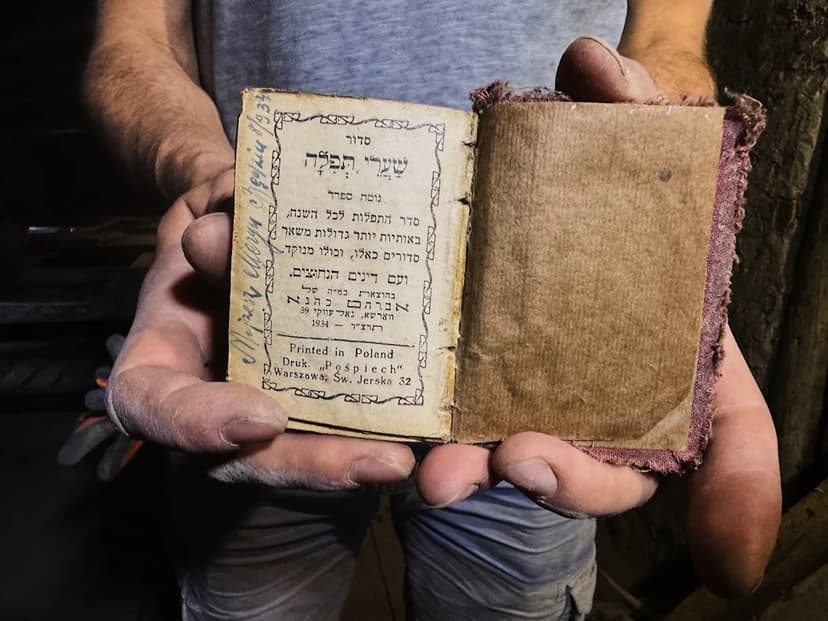
In Bedzin, Poland, a remarkable discovery has been made within a two-story redbrick house formerly part of the World War II Jewish ghetto. During renovations, a secret bunker, an underground tunnel, and a rare armband bearing the Star of David were found. These findings offer a tangible connection to the past, specifically to the Jewish youth who organized a "kibbutz" network within the house to resist Nazi occupation.
The Cukerman's Gate Foundation, using survivors' memoirs and oral histories, previously identified evidence of three bunkers on the property, with one entry accessible through a kitchen oven. It is believed up to 60 individuals may have hidden in these spaces, though survival is uncertain. Volunteers likened their meticulous search to the efforts of the Jewish youth who built these hideouts.
This house is becoming a significant landmark for Holocaust history, particularly as it showcases Jewish self-organized resistance, unlike other preserved sites that often focus on rescuers. Before the war, Bedzin's Jewish community was substantial, and despite the formal creation of ghettos by Nazi authorities in 1942, pockets of resistance persisted across Poland.
Jewish fighters in Bedzin smuggled in weapons, aware of the Warsaw Ghetto Uprising's fate. Some chose to fight back against the Nazis until their deaths. Frumka Płotnicka, a resistance courier, is believed to have died in a third, yet undiscovered, bunker. Resistance was defined broadly, encompassing survival efforts and protecting loved ones.
The house's original builders, the Polak family, lived alongside Jewish residents and witnessed the atrocities. Their descendants chose not to cordon off the property and eventually sold it to the foundation, which plans to transform it into a museum dedicated to the Bedzin Ghetto Fighters.
