Home / War and Conflict / Army Tests AI Battlefield: Future of Warfare Unveiled
Army Tests AI Battlefield: Future of Warfare Unveiled
6 Aug
Summary
- Thousands of troops tested over 90 advanced technologies.
- New command system connects troops, sensors, drones, and weapons.
- Some equipment faced connectivity and overheating issues.
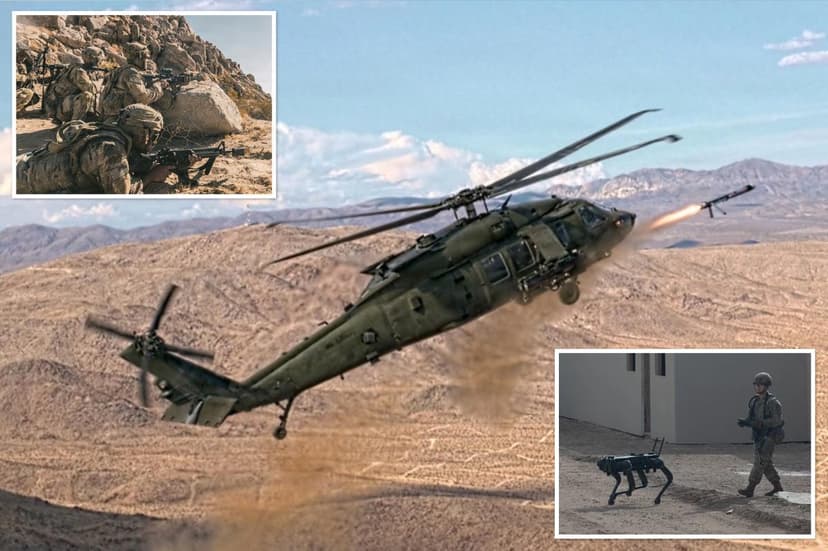
The US Army conducted its Project Convergence Capstone 6 exercise in California's High Mojave Desert, testing over 90 technologies including artificial intelligence and autonomous robots. This nine-day event, held at the end of July, aimed to advance the Army's vision for future warfare by enhancing battlefield decision-making and connectivity.
The centerpiece was the Next-Generation Command and Control (NGC2) system, designed to link soldiers, sensors, drones, and weapons in real-time. This system leverages AI and battlefield sensors to provide commanders with instant information on friendly and enemy positions, enabling faster threat identification and coordinated strikes.
Military leaders hailed the exercise as a success, emphasizing the improved common visualization of the battlefield. The initiative aligns with the Pentagon's broader Combined Joint All-Domain Command and Control (CJADC2) effort to connect all branches of the US military. However, the exercise was not without challenges, as some troops encountered connectivity issues and equipment overheating due to extreme desert temperatures.
Project Convergence, which began in 2020, has expanded to include allied nations like Australia and the United Kingdom. The Army is exploring a shift from annual large-scale events to smaller, more frequent experiments to better analyze data and allow defense companies to test equipment. This program aims to ensure the US military can rapidly share intelligence, coordinate multi-domain attacks, and react faster than adversaries.
Technologies proven successful in Project Convergence, such as NGC2, are slated for wider distribution to Army formations, including Washington state's I Corps. The Army has requested nearly $4 billion to continue developing and fielding these advanced systems, anticipating their eventual integration into the operational force to prepare for future global threats.


