Home / War and Conflict / Drones Rule Ukraine Skies: Tanks Now Static Art
Drones Rule Ukraine Skies: Tanks Now Static Art
24 Feb
Summary
- FPV drones make traditional tank battles nearly impossible.
- Drone casualties rose to 80% of total in the past year.
- Medical evacuations now exceed three days due to drone threats.
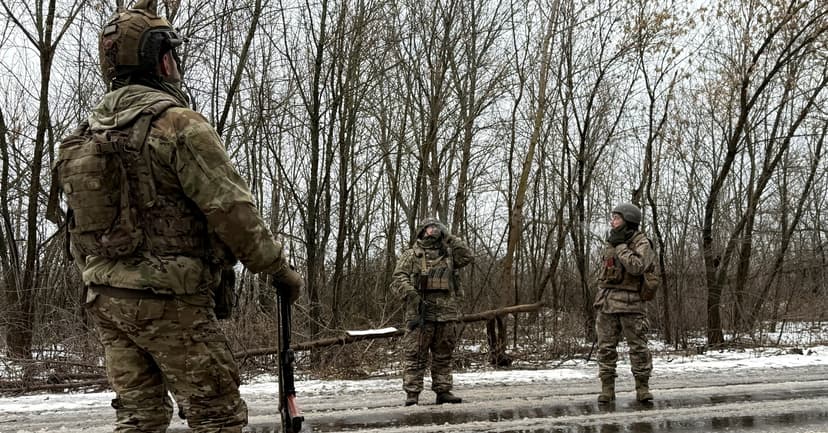
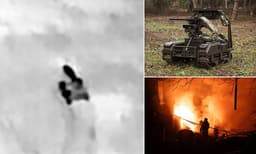
The nature of warfare in Ukraine has dramatically shifted, with advanced drones now dictating battlefield dynamics. Senior Sergeant Valentyn Bohdanov, a tank platoon commander, explains that heavy armor engagements, once like boxing matches, are now nearly impossible due to the pervasive threat of "first-person-view" (FPV) drones. His T-72 tank, for instance, is now kept concealed, functioning primarily as stationary artillery.
The escalating use of drones, from inexpensive FPVs to more powerful long-range variants, has created an expanding "kill zone" along the front lines. This aerial threat has significantly increased casualties, with drone-inflicted harm rising from less than 10% in 2022 to up to 80% in the past year. The conflict has evolved into an "air battle of mutual denial," demanding rapid innovation and adaptation from both sides.
Mobile drone-hunting teams are now a common sight, tasked with defending crucial supply routes. Soldiers recount being overwhelmed by the speed and agility of FPV drones, noting they can strike targets relentlessly. The increased drone threat also prolongs critical medical evacuations, with the average time now exceeding three days, far beyond the traditional "golden hour" for battlefield medicine. This reality necessitates a reevaluation of emergency response in future conflicts.
While tanks are still utilized in specific scenarios like urban combat or poor weather, their role in offensive operations has diminished, largely replaced by smaller infantry assaults. Military analysts suggest that while tanks are not obsolete, the current tactical landscape is temporary, awaiting the next technological breakthrough that may reintroduce maneuvering warfare. This continuous evolution highlights a new logic of warfare driven by speed, adaptation, and seamless technological integration.