


Home / War and Conflict / Portugal's Submarine Conquers Arctic Ice
Portugal's Submarine Conquers Arctic Ice
23 Apr
Summary
- Portugal operated a conventional submarine under Arctic ice.
- Canada studies Portugal's adaptations for its new fleet.
- Global warming opens Arctic routes, increasing ship traffic.
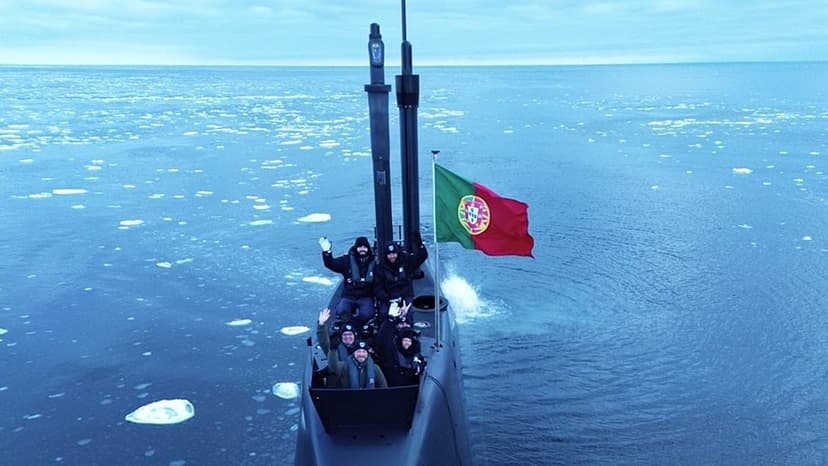
Portugal achieved a historic first by operating a conventional submarine, the NRP Arpão, beneath the Arctic ice between April and June 2024. This mission, supported by US, Canadian, and Danish navies, expanded underwater combat options in the far north. Canada is now studying Portugal's adaptations for its new submarine fleet.
The Arctic is rapidly warming, causing dramatic sea ice shrinkage and opening new shipping routes. Ship traffic has increased by 40% in the last 12 years. Navigating these waters presents extreme challenges, including thinning ice, fragmentation, and icebergs.
Portugal's Arpão utilized Air Independent Propulsion (AIP) technology, enabling extended submerged operation. The crew spent four days under the ice, identifying surfacing points and monitoring ice cover. This venture required extensive preparation, including in-depth area study and specific material adaptations.
Specialized equipment, like high-frequency sonar and protective sail structures, enhanced safety. Portugal's experience provides valuable operational knowledge and has been documented in an Arctic navigation manual for allies.
Canada is incorporating these lessons into its future submarine program, aiming for enhanced Arctic capabilities. The massive procurement project anticipates up to 12 submarines, with the first expected operational by 2037.
The Arctic is increasingly militarized, with escalating geopolitical competition. Portugal's mission demonstrates the potential for conventional submarines to play a role in undersea warfare, offering discretion and expanding tactical options for NATO.
