Home / War and Conflict / Water: The Next Target in Gulf Conflicts?
Water: The Next Target in Gulf Conflicts?
24 Mar
Summary
- Water plants in the Middle East are being targeted, risking worse fallout than oil depot attacks.
- The region relies on desalination plants for 90% of its water resources.
- Targeting water infrastructure is akin to a war crime, with past incidents causing severe disruption.
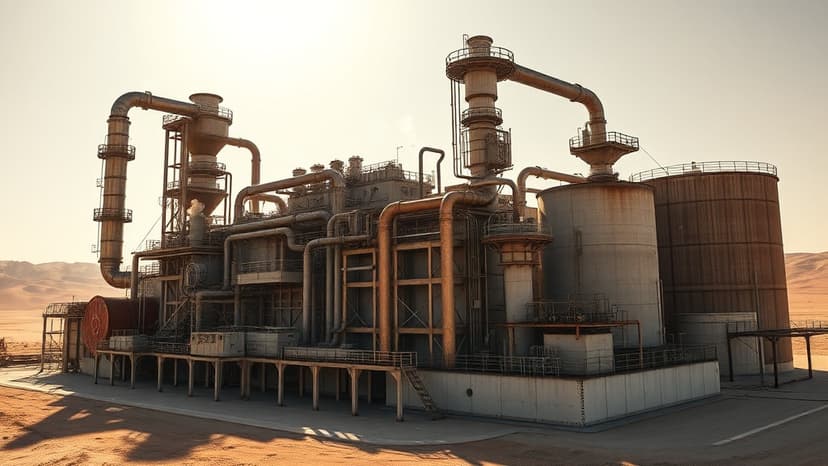
Water scarcity is a critical issue in the Middle East, with the region heavily reliant on expensive desalinated water due to a lack of freshwater resources. Recent conflicts have seen water purification and desalination plants targeted, an act with potentially more severe consequences than attacks on oil facilities. For instance, Iran has alleged US attacks on a plant on Qeshm Island, impacting 30 villages, while Bahrain has accused Iran of damaging a plant via a drone. Iran has issued warnings about targeting water units if its power plants are attacked.
The Persian Gulf hosts over 400 desalination plants, providing approximately 90% of the region's water. Countries like the UAE, Kuwait, Oman, Qatar, and Saudi Arabia have immense dependence on these facilities. Saudi Arabia plans an $80 billion investment in desalination this decade, with mega-plants in Saudi Arabia and Qatar producing significant daily volumes. The UAE alone anticipates a 30% increase in water requirements by 2030, facing a deficit due to low rainfall and minimal groundwater recharge.
Compounding the expense is the higher salinity of Persian Gulf water, making desalination more costly. The region also discharges large volumes of brine, a waste product, into the Gulf. Water trade exists, with Abu Dhabi importing desalinated water from Fujairah. However, plans for inter-country water imports have been abandoned due to political sensitivities.
The reliance on desalination plants adds another layer to regional conflicts. Any aggression risks jeopardizing this critical infrastructure, leading to catastrophic outcomes. Historical incidents, such as Iraq's destruction of plants in 1991 and a 2024 report of damaged water facilities in Khan Younis, underscore the vulnerability and severity of targeting water sources, which can be considered a war crime.