Home / War and Conflict / Iran Mines Gulf: Shipping Lanes Under Threat
Iran Mines Gulf: Shipping Lanes Under Threat
13 Mar
Summary
- Iran is deploying naval mines, complicating shipping in the Strait of Hormuz.
- Clearing mines is dangerous, expensive, and could take weeks for the US Navy.
- Mines are designed for 'mission-kills,' disabling ships rather than sinking them.
Iran has begun deploying naval mines in the Strait of Hormuz, a vital international shipping lane, potentially creating significant complications for global commerce. This tactic adds another layer of danger to an already tense geopolitical situation, as Iran has previously targeted merchant ships and tankers.
The geography of the Strait of Hormuz, with its narrow shipping lanes and relatively shallow waters, favors Iran's mine-laying capabilities. U.S. officials estimate Iran possesses over 5,000 naval mines. Clearing these mines would likely be a weekslong, dangerous, and expensive operation for the U.S. Navy.
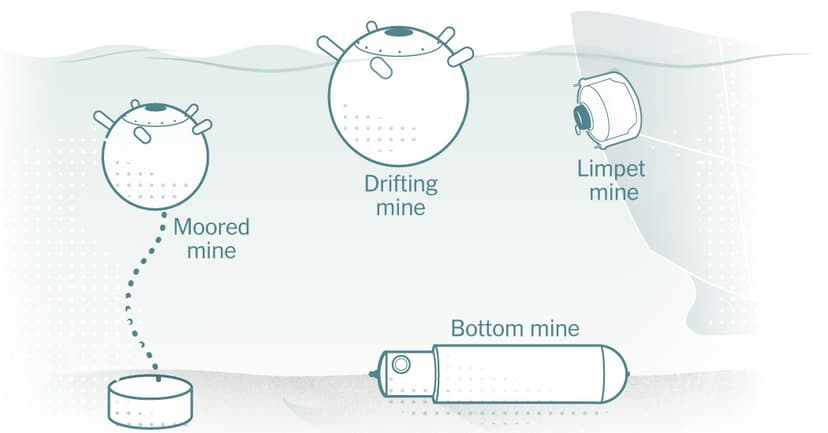
Naval mines, including moored, floater, bottom, and limpet types, are designed to inflict 'mission-kills' by damaging ships enough to prevent them from completing their tasks, rather than sinking them. Modern tankers, with double hulls and internal compartments, are less likely to be sunk but can still be disabled.
Clearing minefields is a painstaking process, made even more difficult under potential hostile fire. While technological advancements have improved mine detection, the task remains arduous. The U.S. military has reportedly targeted Iranian minelayers, but Iran has shifted to using smaller boats to continue its operations.
Reopening the strait may involve identifying safe passage channels through minefields rather than complete eradication. The U.S. military is considering strategies, including continuous surveillance and targeted strikes, to counter Iran's mining efforts and deter further mine-laying activities.