Home / War and Conflict / Mysore's Hero: India Ruler Fueled American Revolution
Mysore's Hero: India Ruler Fueled American Revolution
4 Jul
Summary
- Hyder Ali of Mysore was a symbol of resistance against the British.
- France supported both American rebels and Mysore against Britain.
- A US warship was named 'Hyder Ally' to honor the Mysore ruler.
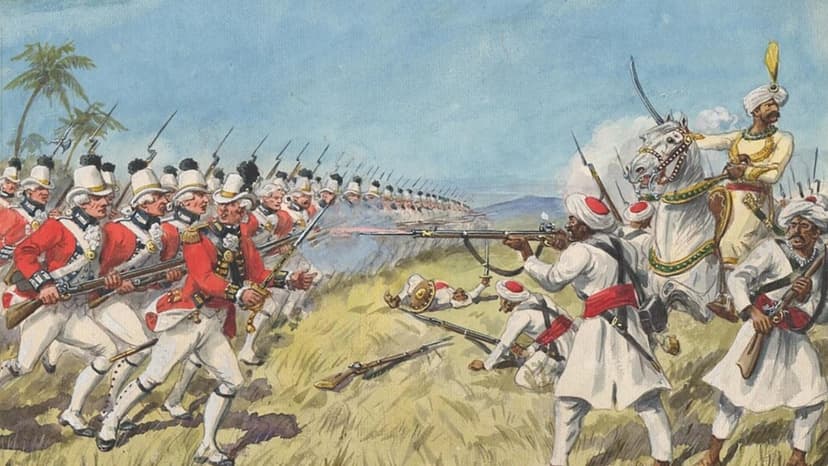
During the American War of Independence, Indian ruler Hyder Ali of Mysore and his son Tipu Sultan were seen as heroes by Americans fighting British imperial power. Although thousands of miles apart and without direct communication, their parallel struggles against the same enemy, Great Britain, created intertwined global conflict.
France, seeking to weaken Britain after its defeat in the Seven Years' War, strategically supported both the American revolutionaries and Hyder Ali's forces in India. This dual front forced Britain to divide its military and financial resources, impacting its ability to focus solely on the North American colonies.
This period, from the American Declaration of Independence in 1776 to the Treaty of Paris in 1783, saw significant admiration for Mysore in America. A testament to this was the commissioning of the American warship 'Hyder Ally' in 1781, named after Hyder Ali, which later achieved a notable victory against a British vessel.
Historians emphasize that while Mysore did not directly win America's independence, the Second Anglo-Mysore War (1780-1784) significantly strained British imperial efforts. The conflict in India, along with French naval presence, limited Britain's capacity to fully concentrate on its American campaigns, influencing the ultimate outcome.
The connection between the East India Company, central to the Boston Tea Party, and the conflict in India highlights the global nature of these imperial rivalries. The story of Hyder Ali and Tipu Sultan, though largely forgotten, underscores the international dimensions of the American Revolution and the shared fight against British dominance.


