Home / War and Conflict / Rafale's Laser Rockets Tackle Drones Cheaply
Rafale's Laser Rockets Tackle Drones Cheaply
6 Sep
Summary
- New counter-drone option certified for Dassault Rafale.
- Uses laser-guided rockets to destroy drones affordably.
- Enhances Rafale's ability to engage inexpensive threats.
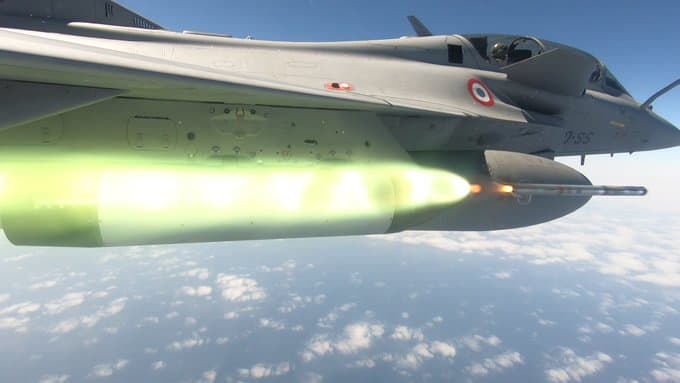
A new counter-drone capability, LADAC, has been certified for the Dassault Rafale fighter jet by the French Directorate General of Armaments and the Air Warfare Centre. This system employs Thales' Aculeus-LG laser-guided rockets, launched from a TELSON 12 JF rocket pod and guided by the Rafale's TALIOS targeting pod. This innovation provides a cost-effective method for intercepting drones and loitering munitions.
The integration of LADAC addresses a critical issue in modern air combat: the economic challenge of using expensive missiles against inexpensive drones. French experience in the Middle East highlighted the unsustainability of engaging attack drones with multi-hundred-thousand-euro air-to-air missiles. The LADAC system allows Rafale pilots to destroy slow-moving drones with relatively inexpensive guided rockets, with each pod carrying twelve rockets, significantly increasing engagement capacity per sortie.
This laser-guided rocket option fills a crucial gap in the Rafale's armament, complementing its internal cannon and long-range missiles. Designed for the Rafale's F4 software standard, integration for India's fighters would primarily involve software updates. This presents an opportunity for India to develop indigenous alternatives, fostering domestic precision-guided munitions industries and potentially reducing reliance on foreign suppliers.
Industrial cooperation with Thales could facilitate the transfer of Aculeus-LG rocket production or component manufacturing to India. This would enable Indian companies to produce guided rocket components domestically, reducing costs, enhancing supply security, and allowing for larger wartime stockpiles. The upcoming MRFA competition, seeking additional Rafale fighters, is expected to see greater interest in this cost-effective counter-drone capability.


