Home / War and Conflict / Drone War's Demands Reshape Arms Manufacturing
Drone War's Demands Reshape Arms Manufacturing
6 Jul
Summary
- Modern warfare requires faster, cheaper drone production.
- Isembard uses a franchise model for rapid factory setup.
- Q5D automates wiring harnesses, speeding up drone assembly.
The ongoing war in Ukraine has highlighted the limitations of traditional defense manufacturing, which is geared towards producing high-cost, low-volume weapons. Modern drone warfare necessitates cheaper, rapidly adaptable systems. Initiatives like the UK's £5bn drone transformation plan are emerging to address this gap.
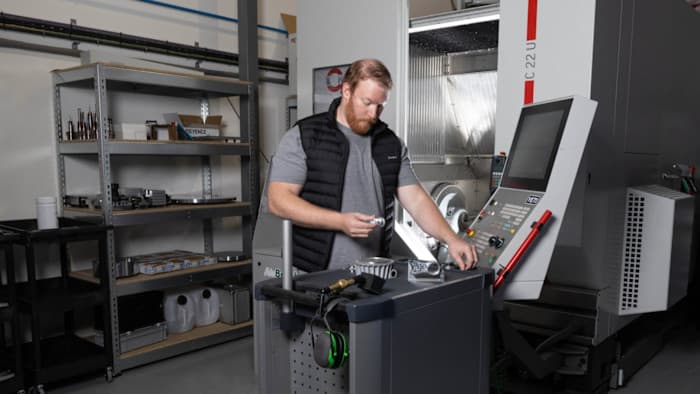
UK startup Isembard exemplifies this new era, aiming to merge precision manufacturing with consumer electronics supply chain efficiencies. The company operates on a franchise model, enabling the establishment of new factories under its brand within months, a stark contrast to the years typically required by established defense contractors.
Isembard's approach involves providing expertise, software, and financing to new operators, facilitating a decentralized production network. Customers include emerging drone makers like Anduril and Tekever, as well as established firms such as Babcock International. The company has rapidly expanded its manufacturing footprint, with multiple factories in the UK and abroad.
This focus on speed is crucial. Rory Rose, an Isembard engineer, emphasizes that slow part turnaround times significantly limit design iterations and overall hardware advancement. He contrasts the West's fragmented production base with China's efficient manufacturing clusters.
Other companies are also addressing production bottlenecks. Q5D, based in England, has developed robotic tools to automate the manufacturing of wiring harnesses, a notoriously slow process usually done by hand. They hold a three-year contract with the US Army to automate wire harness production for their goal of manufacturing a million drones annually.
Similarly, Estonia's Frankenburg Technologies is focusing on affordable missile systems by using commercial off-the-shelf components and building low-capital assembly factories. This mirrors a broader sentiment within NATO, where military leaders stress the need for faster procurement cycles to adapt to evolving threats.
While NATO aims for member nations to produce a million drones per month, scaling production remains a challenge. Many drone companies operate on relatively small contracts, hindering investment in large-scale manufacturing. Governments' stockpiling of drones also presents a risk, as they can quickly become obsolete, creating uncertainty for manufacturers.
Companies like Isembard stress the critical link between manufacturing capacity and military success, urging governments to commit to increasing production orders to spur investment.


