Home / War and Conflict / WWII's Riskiest Forecast: How Weather Won D-Day
WWII's Riskiest Forecast: How Weather Won D-Day
5 Jun
Summary
- D-Day invasion hinged on a risky weather forecast by Group Capt. Stagg.
- Forecasters lacked modern technology, relying on basic observations.
- A one-day delay prevented a catastrophic gale two weeks later.
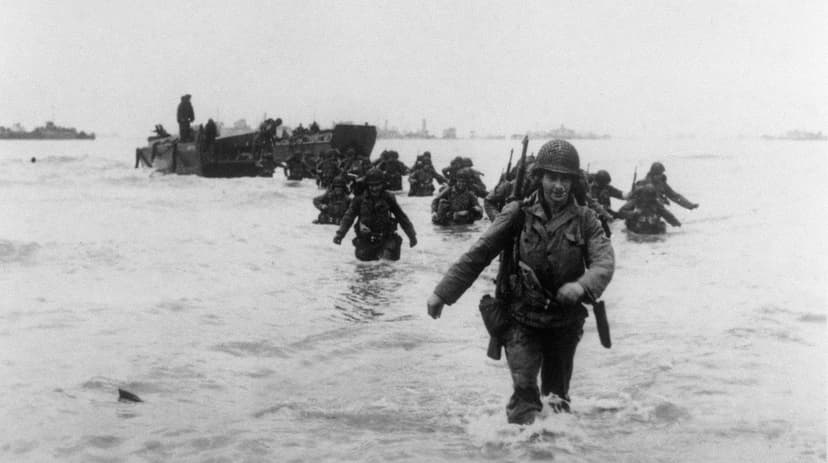
Eighty-two years ago, in June 1944, a pivotal weather forecast profoundly impacted the D-Day invasion. Group Capt. James Stagg, General Eisenhower's chief meteorologist, advised postponing the Normandy landings from June 5 to June 6 due to uncertain weather. This decision, made without modern tools like satellites or computer modeling, relied on surface observations and historical weather patterns.
Stagg and his team faced immense pressure forecasting for the complex invasion, which required specific conditions for naval, air, and land forces. Their challenge was amplified by operating with 1940s technology, a stark contrast to today's advanced forecasting capabilities. The forecast for D-Day was later described as "right for the wrong reason," as the storm system lingered but weakened, creating acceptable conditions.
The new movie "Pressure" highlights this critical moment, with Brendan Fraser portraying General Eisenhower. While the film accurately depicts the importance of weather, it takes some liberties regarding Stagg's involvement and potential conflicts with colleagues. Had the invasion been delayed further, the next suitable window would have brought a gale, likely causing failure. Eisenhower credited the success to "better meteorologists than the Germans."


