Home / War and Conflict / AI Drones Fight Alongside Fighter Jets
AI Drones Fight Alongside Fighter Jets
24 Feb
Summary
- Fighter pilot commanded autonomous drones in tactical maneuvers.
- Drones communicate and execute commands in real time.
- Collaborative Combat Aircraft bolster airpower and pilot capabilities.
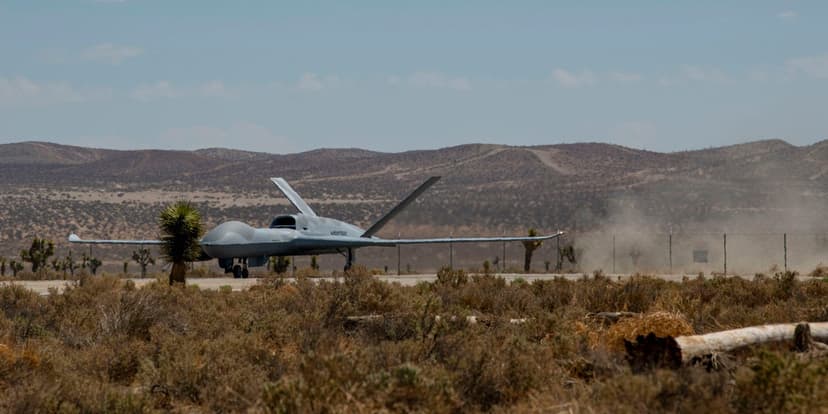
A recent flight test at Edwards Air Force Base showcased a significant advancement in aerial warfare, with a US Air Force F-22 Raptor pilot commanding an uncrewed jet-powered aircraft. The demonstration, involving General Atomics' MQ-20 Avenger as a Collaborative Combat Aircraft (CCA) stand-in, proved that autonomous drones can communicate and execute commands in real-time alongside human pilots.
The F-22 pilot utilized government-provided autonomy software and a tactical data link to direct the drone through complex maneuvers, including combat air patrols and airborne threat engagements. This represents a leap from a previous test in November 2025, where an F-22 pilot controlled a similar drone via a tablet.
Air Force officials view CCAs as a crucial component for bolstering American airpower. These attritable, yet less expensive than manned fighters, drones are designed to fly with advanced crewed aircraft and future sixth-generation fighters. They are intended to increase combat power by adding sensors and weapons without risking another pilot.
General Atomics, along with competitors like Anduril and Northrop Grumman, are developing various CCA platforms. These systems are envisioned as easily upgradable and capable of autonomous missions, ranging from air-to-air combat to intelligence gathering, ultimately changing how pilots interact with AI and drones in future conflicts.