

Home / Technology / ULA's Vulcan Failures Spark Pentagon Launch Rethink
ULA's Vulcan Failures Spark Pentagon Launch Rethink
16 Apr
Summary
- Vulcan rocket experienced two booster anomalies in less than a year.
- Space Force is reevaluating future launch service procurement strategies.
- Mission swaps from Vulcan to SpaceX's Falcon 9 are increasing.
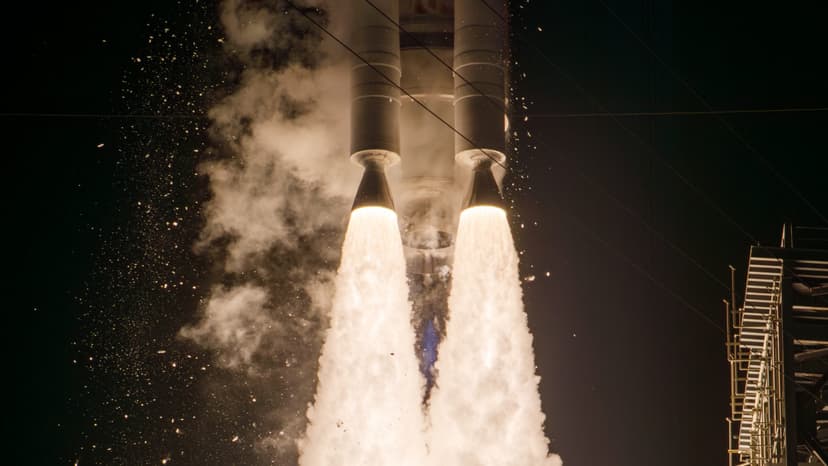
The US Space Force faces significant implications from the repeated grounding of United Launch Alliance's Vulcan rocket. Following two booster anomalies since its January 2024 debut, the rocket is many months from returning to flight for military missions. Officials stated this experience "absolutely will shape" future Pentagon launch service procurements.
Roughly half of the Space Force's major launches are assigned to Vulcan over the next four years. However, issues with its solid rocket boosters, including a nozzle detaching in October 2024 and a similar problem in February 2026, have led to increased scrutiny. Consequently, the military is reevaluating launch assignments, with some GPS satellite missions already swapped to SpaceX's Falcon 9.
While ULA was a long-standing preferred provider, SpaceX secured the majority of military launch contracts starting in 2025 due to its lower costs and faster flight cadence. Blue Origin was also added as a provider. The Space Force is exploring modifications for Vulcan payloads and investigating the root cause of the booster malfunctions.
Engineers are testing new nozzle designs and attempting to recover boosters from the Atlantic Ocean for further analysis. A decision on future government missions using Vulcan with solid rocket boosters will depend on the completion of the root cause investigation and implementation of corrective actions. Meanwhile, ULA may resume flying Vulcan for Amazon's constellation before Space Force approval.
