Home / Technology / US Drone Threats Escalate Over Sensitive Sites
US Drone Threats Escalate Over Sensitive Sites
31 Aug
Summary
- US faces rising drone threats at sensitive locations.
- Foreign intelligence operations, possibly China-linked, are suspected.
- Federal agencies struggle with a unified drone threat authority.
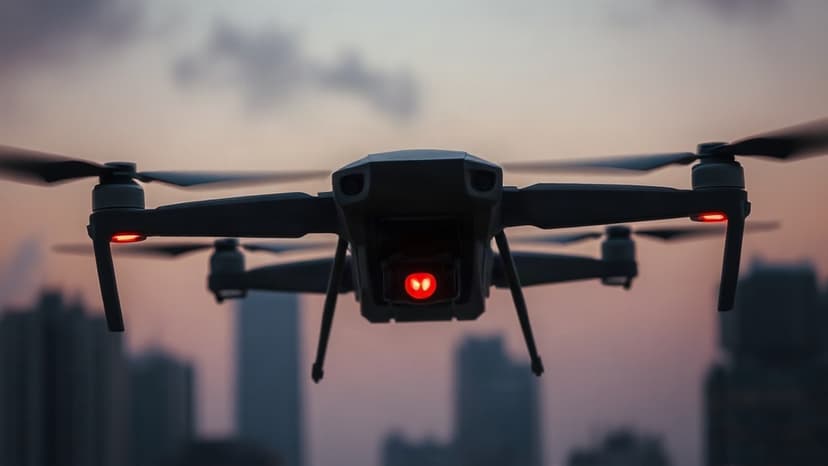
America faces a growing drone threat over military installations, public events, and critical infrastructure, yet lacks a unified federal authority to manage these complex security challenges. Counterintelligence officials are investigating potential foreign intelligence operations, including suspected activity linked to China.
Determining the origin of suspicious drone flights is difficult, often leaving investigators with limited evidence. This uncertainty has hindered prosecutions and highlighted weaknesses in the U.S. counter-drone system, a challenge known as counter-unmanned aircraft systems (C-UAS).
The Virginia drone incident in late 2023, where unidentified drones appeared for 17 days near an Air Force installation, highlighted the disorganized response. This led to a coordinated task force, improving responses to drone incidents over military bases.
Federal agencies are investing in advanced technologies like directed-energy systems to detect and disable drones. Efforts are also underway to expand counter-drone training and equipment access to state and local authorities, especially around large public gatherings.
However, recent incidents, such as an FAA airspace closure over El Paso due to uncoordinated laser testing and a military laser system accidentally downing a CBP drone, underscore the risks of new systems without proper coordination.
Privately owned critical infrastructure, like data centers, presents another vulnerability. Local police often serve as the first line of defense, despite lacking advanced equipment or legal authority.
U.S. investigators are also focusing on Chinese nationals and potential intelligence activity, though officials caution against automatically attributing every suspicious flight to espionage. A 2024 case involving a Chinese national arrested near Vandenberg Space Force Base for violating restricted airspace illustrates the difficulty in proving espionage.
Beyond espionage, officials worry about drones delivering dangerous substances or weapons. The theft of agricultural pesticide drones in New Jersey raised concerns about potential repurposing for chemical agents.
While operations like the one at White Sands show successful interagency coordination, underlying national security problems persist. The U.S. is improving technology and cooperation, but drones can cross jurisdictions faster than agencies can respond.
Officials agree that while the country is better prepared than in previous years, significant vulnerabilities remain.


