feedzop-word-mark-logo
searchLogin
Feedzop
homeFor YouUnited StatesUnited States
You
bookmarksYour BookmarkshashtagYour Topics
Trending
trending

Messi leads Inter Miami victory

trending

Georgia Bulldogs vs Alabama

trending

Notre Dame playoff snubbed

trending

NFL RedZone audio glitch

trending

Bengals beat the Bills

trending

Bills player returns for Bengals

trending

Daniel Jones Achilles injury

trending

Coca-Cola faces plastic criticism

trending

Texans, Chiefs Sunday night

Terms of UsePrivacy PolicyAboutJobsPartner With Us

© 2025 Advergame Technologies Pvt. Ltd. ("ATPL"). Gamezop ® & Quizzop ® are registered trademarks of ATPL.

Gamezop is a plug-and-play gaming platform that any app or website can integrate to bring casual gaming for its users. Gamezop also operates Quizzop, a quizzing platform, that digital products can add as a trivia section.

Over 5,000 products from more than 70 countries have integrated Gamezop and Quizzop. These include Amazon, Samsung Internet, Snap, Tata Play, AccuWeather, Paytm, Gulf News, and Branch.

Games and trivia increase user engagement significantly within all kinds of apps and websites, besides opening a new stream of advertising revenue. Gamezop and Quizzop take 30 minutes to integrate and can be used for free: both by the products integrating them and end users

Increase ad revenue and engagement on your app / website with games, quizzes, astrology, and cricket content. Visit: business.gamezop.com

Property Code: 5571

Home / Technology / Tech Firms Bet Big on Physical AI, Predicting 1 Billion Humanoid Robots by 2050

Tech Firms Bet Big on Physical AI, Predicting 1 Billion Humanoid Robots by 2050

14 Nov

Summary

  • Tech firms investing heavily in physical AI and humanoid robots
  • Morgan Stanley predicts over 1 billion humanoid robots worldwide by 2050
  • Robots being developed to assist in care homes and perform household tasks
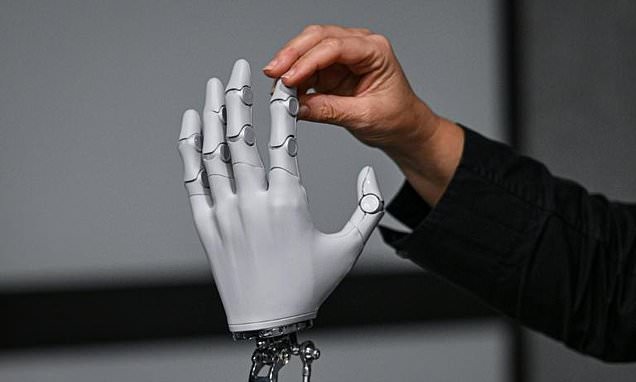
Tech Firms Bet Big on Physical AI, Predicting 1 Billion Humanoid Robots by 2050

As of November 14th, 2025, the tech industry is making significant investments in the field of physical AI, with the goal of integrating intelligent robots into our daily lives. According to a recent report by Morgan Stanley, the world could have more than a billion humanoid robots by the year 2050.

These advanced androids are being designed to tackle a wide range of tasks, from washing dishes and doing laundry in short-staffed Japanese care homes to potentially performing "almost any human role" in the future, including jobs as nannies, home chefs, and gardeners. Companies like XPeng, Unitree Robotics, and EngineAI in China, as well as Boston Dynamics in the US, are at the forefront of this technological revolution.

However, the transition to widespread physical AI is not without its challenges. While the robots can already perform impressive feats, such as dancing and moving heavy objects, their dexterity and ability to handle delicate tasks still lag behind their AI capabilities. Additionally, the high cost of these machines, with a single robot hand potentially costing as much as a Chinese worker's annual salary, could hinder their immediate adoption in certain industries.

Despite these obstacles, tech giants like Nvidia and SoftBank remain bullish on the future of physical AI, viewing it as the "next frontier" in the field of artificial intelligence. As the technology continues to evolve, the impact of these humanoid robots on the job market, privacy, and everyday life is sure to be a topic of ongoing discussion and debate.


Disclaimer: This story has been auto-aggregated and auto-summarised by a computer program. This story has not been edited or created by the Feedzop team.
According to the article, Morgan Stanley predicts the world could have more than a billion humanoid robots by 2050.
The article states that Chinese electric vehicle maker XPeng is pushing into physical AI and has unveiled humanoid robots that can walk and dance autonomously, though their ability to handle objects is still limited.
The article mentions that the high cost of these robots, with a single robot hand potentially costing as much as a Chinese worker's annual salary, could hinder their immediate adoption in certain industries. Additionally, the robots' dexterity and ability to handle delicate tasks still lag behind their AI capabilities.

Read more news on

Technologyside-arrowChinaside-arrow
•

You may also like

Nvidia CEO: Fear fuels my success

15 hours ago • 4 reads

article image

Microsoft AI Sales: Reports Denied, Stock Inches Up

6 Dec • 11 reads

article image

AI Startup Aaru Raises Series A, Blended Valuation Under $1B

6 Dec • 15 reads

article image

TSMC: The Chip Monopoly Quietly Dominating AI

6 Dec • 9 reads

article image

SoftBank's Son: Cash Needs Drove Nvidia Sale

2 Dec • 26 reads

article image