Home / Technology / SpaceX Satellites: Burning Up or Breaking Apart?
SpaceX Satellites: Burning Up or Breaking Apart?
17 Jul
Summary
- SpaceX satellites contain components likely to survive re-entry.
- Company is lowering Starlink orbits to reduce collision risks.
- New FCC rule mandates satellite deorbiting within five years.
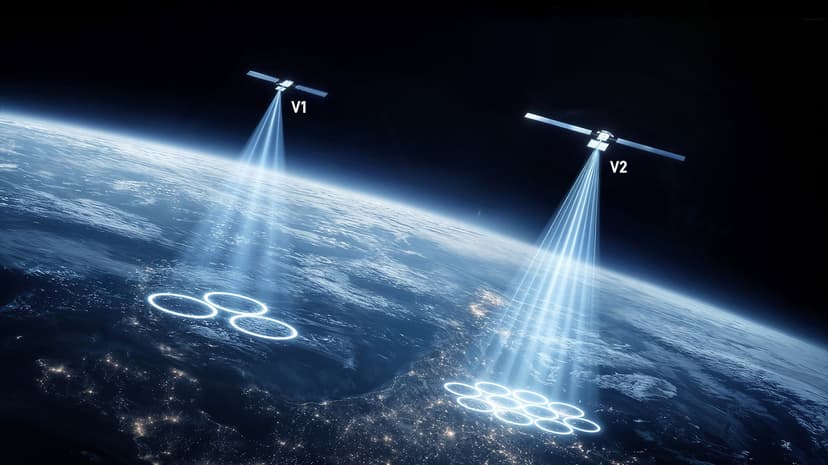
SpaceX has admitted that certain components within its Starlink satellites, specifically silicon from solar cells, possess high melting temperatures and may survive atmospheric re-entry without fully disintegrating. The company estimates that only about 5% of a satellite's mass could endure this process, falling in small fragments with minimal impact energy, likely into the ocean.
To manage this, SpaceX employs controlled, propulsive deorbiting, which is faster and safer than uncontrolled atmospheric descent. The company's "Commitment to Space Sustainability" outlines that satellites orbit below 600 kilometers, where atmospheric drag naturally deorbits them within five years. This practice also adheres to a 2022 FCC rule mandating a five-year deorbit timeframe for Low Earth Orbit satellites to minimize space debris.
In a significant move, SpaceX announced it is lowering the orbits of its satellites from approximately 550 kilometers to 480 kilometers throughout 2026. This adjustment, according to Starlink Engineering VP Michael Nicolls, is intended to reduce collision likelihood by operating in areas with less space debris and planned constellations. Additionally, lower altitudes facilitate quicker deorbiting and, as noted by Elon Musk, enable Starlink to serve a greater customer density.


