feedzop-word-mark-logo
searchLogin
Feedzop
homeFor YouUnited StatesUnited States
You
bookmarksYour BookmarkshashtagYour Topics
Trending
Terms of UsePrivacy PolicyAboutJobsPartner With Us

© 2026 Advergame Technologies Pvt. Ltd. ("ATPL"). Gamezop ® & Quizzop ® are registered trademarks of ATPL.

Gamezop is a plug-and-play gaming platform that any app or website can integrate to bring casual gaming for its users. Gamezop also operates Quizzop, a quizzing platform, that digital products can add as a trivia section.

Over 5,000 products from more than 70 countries have integrated Gamezop and Quizzop. These include Amazon, Samsung Internet, Snap, Tata Play, AccuWeather, Paytm, Gulf News, and Branch.

Games and trivia increase user engagement significantly within all kinds of apps and websites, besides opening a new stream of advertising revenue. Gamezop and Quizzop take 30 minutes to integrate and can be used for free: both by the products integrating them and end users

Increase ad revenue and engagement on your app / website with games, quizzes, astrology, and cricket content. Visit: business.gamezop.com

Property Code: 5571

Home / Technology / SpaceX Eyes 1 Million Satellites for Orbital Data Centers

SpaceX Eyes 1 Million Satellites for Orbital Data Centers

2 Feb

•

Summary

  • SpaceX filed an FCC application for up to 1 million orbital data centers.
  • New Starlinks will offer significantly higher uplink and downlink capacity.
  • Concerns about orbital overcrowding contrast with Musk's confidence.
SpaceX Eyes 1 Million Satellites for Orbital Data Centers

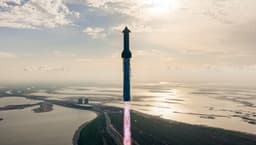
SpaceX has submitted an FCC application to launch a constellation of up to 1 million Starlink satellites designated for orbital data centers. This initiative aims to provide immense power and capacity for the burgeoning AI industry, purportedly without depleting Earth's resources. The proposed satellites, operating across various low-Earth orbit altitudes, are the third generation of Starlinks.

These V3 Starlinks, slated for launch in the first half of 2026, will feature substantial upgrades, offering over a terabit per second downlink and 200 gigabits per second uplink capacity. This represents a significant leap from previous generations. Elon Musk has also confirmed plans for a SpaceX IPO this year, potentially raising up to $50 billion to fund this ambitious orbital data center venture.

The sheer scale of the proposal, aiming for a million satellites, has ignited concerns regarding orbital congestion and the potential for increased collision risks. Retired astrophysicist Jonathan McDowell has tracked the growing number of objects in orbit, highlighting the existing density.

trending

Chelsea beats West Ham 3-2

trending

Liverpool, Newcastle face injury woes

trending

WWE Royal Rumble in Riyadh

trending

Barcelona faces Elche in LaLiga

trending

Goretzka staying at Bayern Munich

trending

ICC T20 World Cup squads

trending

Gold, silver ETFs crashed

trending

Curran, Pandya T20Is stats compared

trending

Suryakumar Yadav T20I record

Despite these worries, Musk claims the vastness of space and the intended spacing of his satellites will prevent increased collision risks. SpaceX plans to position these satellites in orbital shells between 500 and 2,000 kilometers above Earth, utilizing "largely unused orbital altitudes" to maximize solar power generation.

However, significant questions persist regarding the timeline for deployment, the immense costs involved, and the regulatory hurdles. SpaceX has requested a waiver from FCC milestone requirements, indicating the complexity and extended timeline anticipated for such a massive deployment. The success of this venture also hinges on the reliable operation of the next-generation Starship rocket, currently scheduled for its first launch in early March.

Disclaimer: This story has been auto-aggregated and auto-summarised by a computer program. This story has not been edited or created by the Feedzop team.
SpaceX has filed an FCC application to launch up to 1 million Starlink satellites that would function as orbital data centers, aiming to support the AI boom.
Concerns have been raised about the potential overcrowding of Earth's orbit with an additional million satellites and the increased risk of collisions.
SpaceX plans to launch the first batch of its third-generation Starlinks in the first half of 2026.

Read more news on

Technologyside-arrowElon Muskside-arrow

You may also like

SpaceX Starship V3 Set for Mid-March Launch

26 Jan • 60 reads

article image

SpaceX IPO: Risks and Rewards Revealed

17 Jan • 130 reads

article image

SpaceX Offers Free Internet in Iran Amid Blackout

14 Jan • 119 reads

article image

SpaceX Aims for Faster Phone Satellites

19 Dec, 2025 • 263 reads

article image

SpaceX Eyes $30B IPO for Orbital AI Data Centers

10 Dec, 2025 • 268 reads

article image