Home / Technology / SpaceX Lasers Power Orbital Data Centers
SpaceX Lasers Power Orbital Data Centers
27 May
Summary
- Starcloud will integrate SpaceX's gigabit laser tech into its satellites.
- Orbital data centers aim to bypass bandwidth-limited ground stations.
- This expands Starlink's role beyond Earth-based internet services.
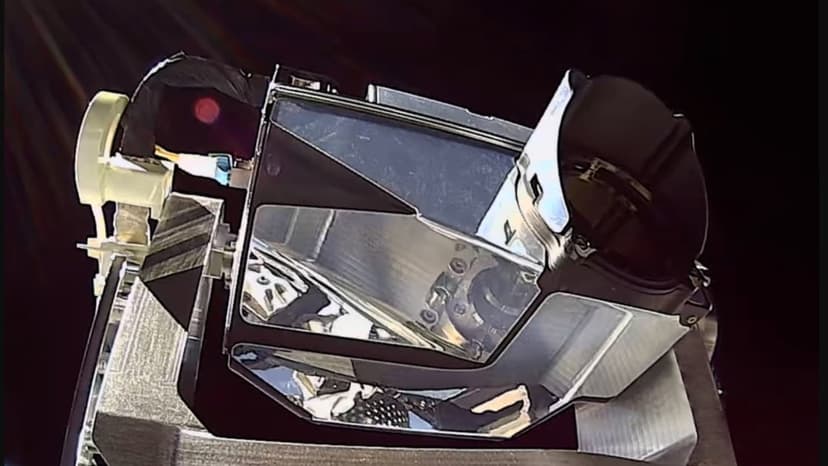
Startup Starcloud is set to integrate SpaceX's gigabit laser technology into its satellite constellation, aiming to establish the first orbital data centers. The plan involves equipping over 25 Starcloud satellites with "Mini Lasers" that will enable direct optical communication links with SpaceX's existing Starlink network.
This innovative approach allows Starcloud to transmit data back to Earth by communicating with neighboring Starlink satellites, thereby circumventing the bandwidth limitations of traditional ground stations. This marks a significant expansion for SpaceX's Starlink, moving beyond its primary function of providing high-speed internet to users on the ground and venturing into supporting other orbiting assets.
SpaceX has been utilizing its laser technology since at least 2021, enabling inter-satellite data transfer speeds of up to 200Gbps. The company has been offering this mini laser system, capable of transmitting up to 25Gbps over 4,000 kilometers, to third-party companies since last year. Starcloud, which successfully tested a prototype satellite last year, is now formalizing its adoption of this technology, describing it as the "connective tissue" for its orbital data center architecture.
Starcloud aims to operate a satellite cluster by 2027 and envisions a long-term deployment of up to 88,000 satellites. SpaceX itself is preparing to enter the orbital data center market with next-generation satellites and plans to eventually operate up to 1 million satellites. The feasibility of orbiting data centers outperforming ground-based ones in cost and efficiency remains a key question.
Starcloud joins other companies adopting SpaceX's mini lasers, including Muon Space for climate monitoring satellites and US aerospace company Vast for its upcoming space station. SpaceX also has aspirations to use Starlink for lunar and Martian connectivity.


