

Home / Technology / SpaceX Floats Data Centers in Space
SpaceX Floats Data Centers in Space
6 Apr
Summary
- SpaceX's orbital data center concept uses space's cold for cooling.
- Launch costs and Starship could make space compute economically viable.
- Technical hurdles include power, thermal management, and latency.
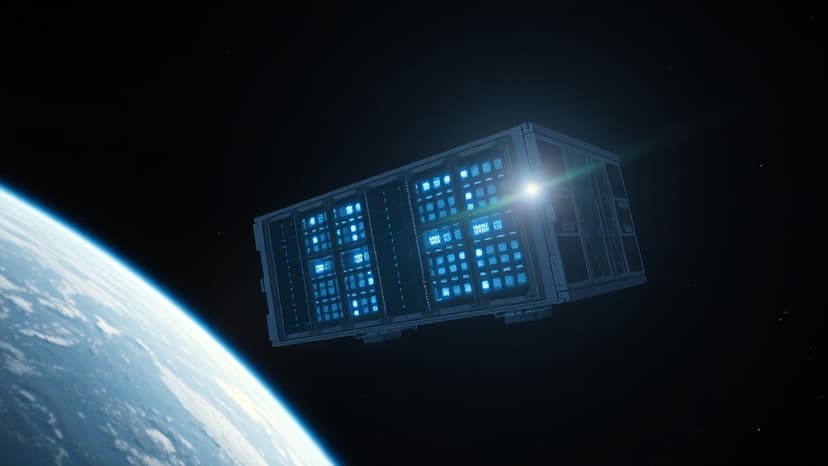
SpaceX is exploring the feasibility of deploying data centers in low Earth orbit, leveraging the vacuum of space for cooling and solar energy. This concept is contributing to its staggering $350 billion valuation, making it the most valuable private company. The idea aims to address terrestrial data center constraints like power and cooling availability.
SpaceX's structural advantage lies in its cost-effective launch capabilities with Falcon 9 and Starship. However, building orbital data centers presents significant engineering challenges. The power requirements for AI workloads far exceed current Starlink satellite capabilities, necessitating much larger solar arrays.
Thermal management in a vacuum is an unsolved problem at the scale required, and signal latency poses issues for real-time applications. Despite these hurdles, investors are pricing in the possibility, with the orbital compute market projected to be enormous.
Established companies like Microsoft and Amazon are also exploring hybrid cloud architectures, but SpaceX's launch cost advantage could be decisive. Military interest is also growing for distributed orbital compute to process intelligence data faster.
