Home / Technology / Sodium-Ion Batteries Pass Major Safety Test
Sodium-Ion Batteries Pass Major Safety Test
30 Aug
Summary
- Hyundai validated Unigrid's sodium-ion batteries for safety.
- These batteries showed no fire or thermal propagation in tests.
- Sodium-ion offers a more abundant and affordable alternative to lithium.
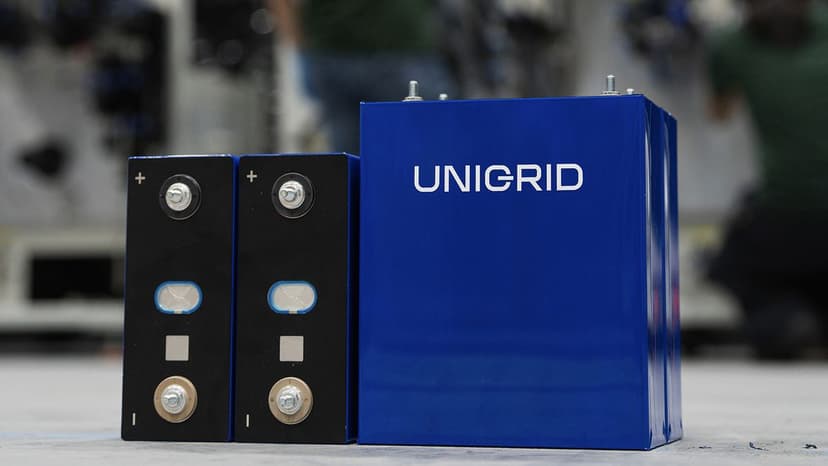
Sodium-ion battery technology has reached a critical milestone with Hyundai validating new sodium-ion cells developed by Unigrid. These cells, utilizing sodium chromium oxide (NCO) chemistry, successfully passed rigorous safety evaluations. Notably, they exhibited no instances of thermal runaway or fire propagation, addressing a major concern with current lithium-ion batteries. The technology also demonstrated minimal capacity degradation over sustained use and performed reliably across a wide temperature range, from -20C to 60C.
The key difference lies in the use of abundant sodium ions instead of lithium. While lithium-ion batteries have dominated due to higher energy density, sodium-ion's advantage of readily available and cheaper raw materials is increasingly attractive. This makes it a promising candidate for large-scale energy storage applications, though its lower energy density currently makes it less suitable for smaller devices like smartphones.
Industry giants are recognizing this potential. CATL, the world's largest battery manufacturer, plans to mass-produce its own sodium-ion batteries, based on Prussian white technology, by the end of 2026. These batteries are anticipated to be cost-effective and easier to manufacture at scale. Despite ongoing research to improve energy density and other performance metrics, sodium-ion batteries are expected to coexist with and complement lithium-ion technology in the evolving energy landscape.


