Home / Technology / Norway's Rogfast: Tunneling Through Unstable Earth
Norway's Rogfast: Tunneling Through Unstable Earth
16 Jul
Summary
- The tunnel faces unpredictable geology and constant saltwater pressure.
- Specialized grouting seals leaks, maintaining a 50-meter rock safety margin.
- Construction faced a significant budget increase after initial setbacks.
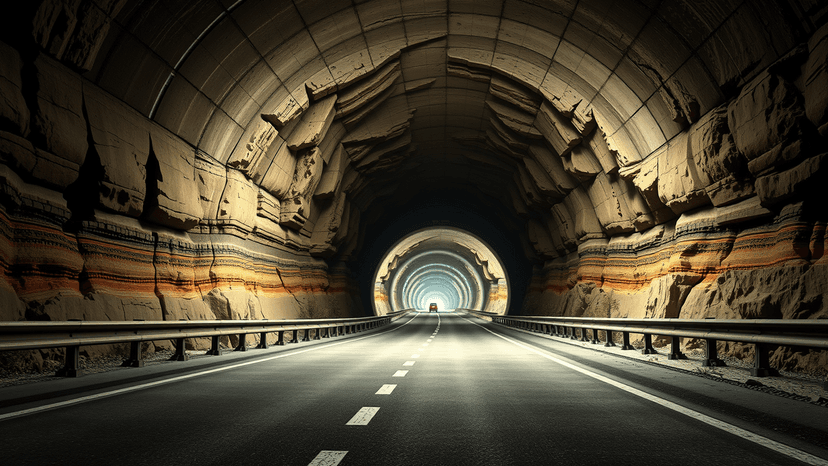
Norway's Rogfast tunnel, destined to be the world's longest and deepest undersea road passage, is an immense engineering feat. Crews are confronting highly unpredictable geological conditions and relentless saltwater pressure deep beneath the Boknafjord. The route navigates through fractured fault zones and dense rock formations, demanding constant adaptation from the engineering teams.
Engineers are employing specialized grouting and sealing methods to counteract significant saltwater intrusions encountered around 300 meters below sea level. Norwegian regulations mandate a minimum of 50 meters of solid rock between the tunnel and the sea, a critical safety measure under immense pressure.
Construction commenced in 2018 but experienced a halt due to predicted cost overruns, leading to a budget increase of approximately eight billion Norwegian kroner. Work recommenced in 2021, with contracts for the tunnel's sections awarded between 2022 and 2024, establishing a more realistic project footing.
A unique junction featuring two submerged roundabouts at approximately 260 meters below sea level is being constructed near Kvitsøy. This innovative design ensures traffic continuity even if one tunnel tube requires closure for maintenance or emergencies.
The Rogfast project is informing future fjord crossing solutions along Norway's E39 coastal highway, contributing to the nation's extensive expertise in complex underground engineering.


