Home / Technology / Robotics' ChatGPT Moment: Still Years Away?
Robotics' ChatGPT Moment: Still Years Away?
13 Jan
Summary
- Robotic warehouse closures show automation's high costs.
- Humanoid robots face safety and battery life challenges.
- Technical advances don't guarantee real-world economic impact.
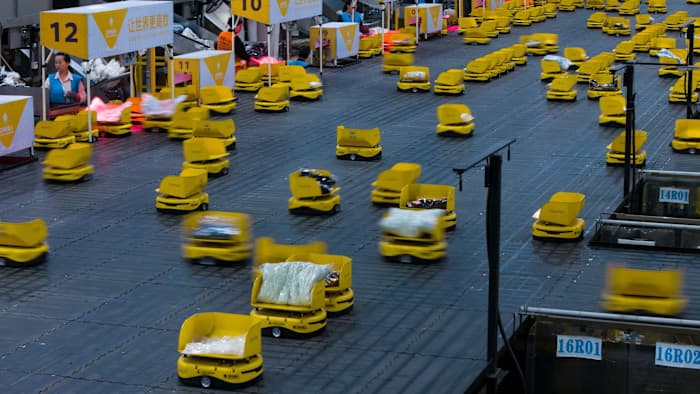
Nvidia's CEO predicted a 'ChatGPT moment' for general robotics is near, but the reality for physical AI adoption appears more distant. While advancements continue, such as in self-driving cars, some companies are retracting. Kroger, a US supermarket chain, closed three robotic warehouses, opting instead to expand its use of gig economy workers for tasks like order fulfillment. This decision highlights the commercial challenges of automation.
Implementing robotic systems demands significant planning, time, and capital investment, unlike readily available AI software. Grocery automation, for example, requires high demand to justify the cost of automated warehouses. While some companies like Ocado in the UK and Picnic in the Netherlands have found success, and Walmart has seen revenue growth with reduced headcount, these are exceptions. The business case for automation is not always straightforward.
Future potential lies with humanoid robots that could integrate into existing human workplaces. However, practical issues remain. Ensuring safety when deploying AI-powered robots alongside humans is paramount, as malfunctions could be dangerous. Additionally, current battery technology limits robot stamina; for instance, Boston Dynamics' Spot robot operates for only about 90 minutes. Therefore, while automation will grow, technical breakthroughs alone do not guarantee immediate economic transformation.