

Home / Technology / AI Sees Through Buses: Robotaxis Get Smarter
AI Sees Through Buses: Robotaxis Get Smarter
29 Apr
Summary
- Waymo's AI can predict pedestrian movement hidden behind obstacles.
- Robotaxis leverage AI for rapid international expansion and new operator competition.
- AI enables autonomous vehicles to generalize experiences to new situations.
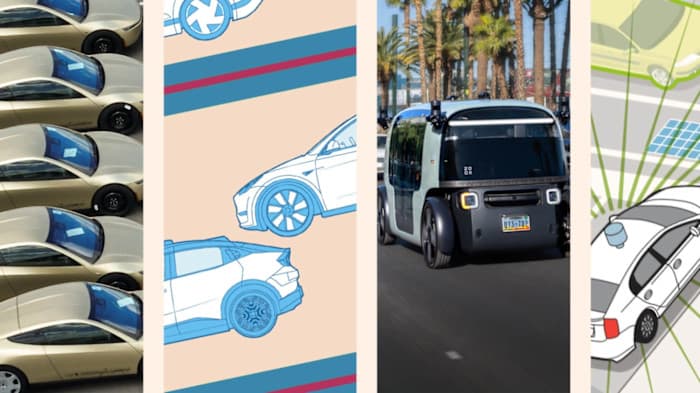
Robotaxis are experiencing rapid international expansion, fueled by breakthroughs in artificial intelligence. Waymo's autonomous vehicles, owned by Google's parent Alphabet, have reached a new level of sophistication. Their AI can now predict pedestrian behavior, even when obscured by obstacles, a capability that astonished Waymo's co-CEO, Dmitri Dolgov. This advancement allows vehicles to generalize their experiences to novel situations and environments.
Initially, early robotaxis relied on hard-coded directives and extensive real-world testing. Waymo's evolution, particularly with its fifth-generation system introduced in 2020, marked a significant bet on AI as the core technology. This AI-driven approach, similar to large language models, underpins systems for driving, simulation, and performance evaluation, creating a continuous feedback loop for improvement.
This AI revolution is spurring competition, with new operators like Waabi and Wayve challenging Waymo's lead. These companies are betting on AI-first strategies and simpler sensor suites to scale faster and more affordably than traditional methods. While Waymo operates within defined geographic areas, some rivals aim for broader, geofence-free deployment using foundational AI models.
The robotaxi market is attracting billions in investment, with significant expansion plans from various players, including Uber, Zoox, and Tesla. Chinese operators are also deploying fleets across Asia, and Waymo is testing in Tokyo. The industry anticipates substantial growth, with projections suggesting a significant share of the rideshare market by 2030.
