feedzop-word-mark-logo
searchLogin
Feedzop
homeFor YouUnited StatesUnited States
You
bookmarksYour BookmarkshashtagYour Topics
Trending
Terms of UsePrivacy PolicyAboutJobsPartner With Us

© 2026 Advergame Technologies Pvt. Ltd. ("ATPL"). Gamezop ® & Quizzop ® are registered trademarks of ATPL.

Gamezop is a plug-and-play gaming platform that any app or website can integrate to bring casual gaming for its users. Gamezop also operates Quizzop, a quizzing platform, that digital products can add as a trivia section.

Over 5,000 products from more than 70 countries have integrated Gamezop and Quizzop. These include Amazon, Samsung Internet, Snap, Tata Play, AccuWeather, Paytm, Gulf News, and Branch.

Games and trivia increase user engagement significantly within all kinds of apps and websites, besides opening a new stream of advertising revenue. Gamezop and Quizzop take 30 minutes to integrate and can be used for free: both by the products integrating them and end users

Increase ad revenue and engagement on your app / website with games, quizzes, astrology, and cricket content. Visit: business.gamezop.com

Property Code: 5571

Home / Technology / Ring's Dog Ad: Mass Surveillance Scare?

Ring's Dog Ad: Mass Surveillance Scare?

12 Feb

Summary

  • Ring's new AI feature uses neighborhood cameras to find lost pets.
  • Critics condemn the feature as a step towards mass surveillance.
  • Security camera footage can be accessed by law enforcement with warrants.
Ring's Dog Ad: Mass Surveillance Scare?

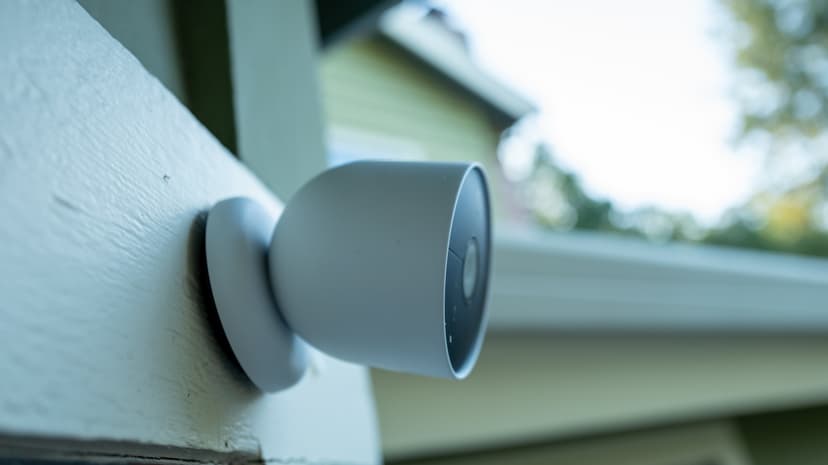
A recent Super Bowl advertisement for Amazon's Ring camera, highlighting a new AI-powered "Search Party" feature designed to locate missing pets using neighborhood cameras, has drawn significant criticism. The feature, which activates multiple Ring cameras to scan for a lost dog, has been decried by politicians and social media users as a concerning development for mass surveillance.

This controversy emerges shortly after Ring announced a partnership with Flock Safety, a company specializing in license-plate scanning, fueling existing worries about potential data access by agencies like ICE. Concurrently, Google Nest footage taken the night of Nancy Guthrie's abduction from her home was recently released, showing a masked suspect, prompting further public scrutiny of smart security camera capabilities.

Security camera footage privacy is a major concern, as companies like Ring and Nest may be legally compelled to share recordings with authorities via subpoenas or court orders. In emergency situations involving immediate danger, companies can share video without user notification, and may even be restricted from disclosing such sharing due to legal constraints.

Ring has clarified that its employees cannot view or control live streams, with the AI analyzing videos automatically. Users must consent to sharing any matched footage initiated by a 'Search Party' request. Despite these reassurances, many, including Senator Edward J. Markey, have expressed that the technology poses a threat to privacy.

Data from Amazon's Ring reveals that while most user footage is untouched, thousands of law enforcement requests for information are processed semi-annually. In the latter half of 2025, Ring fulfilled over a thousand requests for content, often without notifying the affected users. Similar transparency reports for Google Nest have become less specific since 2019.

Users can enhance data security by enabling two-factor authorization, using unique passwords, and disabling shared access. End-to-end encryption can further restrict data access to the owner, though this may limit advanced features like AI search and live view on Ring devices.

Disclaimer: This story has been auto-aggregated and auto-summarised by a computer program. This story has not been edited or created by the Feedzop team.
Ring's new AI-powered 'Search Party' feature uses neighborhood cameras to help find lost pets by scanning video footage for matches.
Yes, authorities can access security camera footage through legal means such as subpoenas and search warrants, or in emergency situations.
You can protect your data by enabling two-factor authorization, using unique passwords, disabling shared access, and enabling end-to-end encryption where available.

Read more news on

Technologyside-arrowArtificial Intelligence (AI)side-arrow
•
trending

Salesforce lays off 1000

trending

India US trade tariffs slashed

trending

Margot Robbie's Wuthering Heights panned

trending

CBSE board exams: key details

trending

Jana Nayagan movie court case

trending

Dhakshineswar Suresh Davis Cup hero

trending

Deepika Padukone wears Gaurav Gupta

trending

NZ vs UAE match prediction

trending

iPhone 17 Croma Valentine's sale

You may also like

Apple Faces AI Challenge: A Software Rethink?

2 Feb • 89 reads

article image

McConaughey Protects Voice, Face From AI

31 Jan • 75 reads

article image

Joseph Gordon-Levitt: Hollywood Rebel or Indie Darling?

19 Jan • 145 reads

article image

Founder Returns: Ring Bets Big on AI

14 Jan • 200 reads

article image

LinkedIn Bans Startup, But It's Not for Spamming

8 Jan • 167 reads

article image