feedzop-word-mark-logo
searchLogin
Feedzop
homeFor YouUnited StatesUnited States
You
bookmarksYour BookmarkshashtagYour Topics
Trending
Terms of UsePrivacy PolicyAboutJobsPartner With Us

© 2026 Advergame Technologies Pvt. Ltd. ("ATPL"). Gamezop ® & Quizzop ® are registered trademarks of ATPL.

Gamezop is a plug-and-play gaming platform that any app or website can integrate to bring casual gaming for its users. Gamezop also operates Quizzop, a quizzing platform, that digital products can add as a trivia section.

Over 5,000 products from more than 70 countries have integrated Gamezop and Quizzop. These include Amazon, Samsung Internet, Snap, Tata Play, AccuWeather, Paytm, Gulf News, and Branch.

Games and trivia increase user engagement significantly within all kinds of apps and websites, besides opening a new stream of advertising revenue. Gamezop and Quizzop take 30 minutes to integrate and can be used for free: both by the products integrating them and end users

Increase ad revenue and engagement on your app / website with games, quizzes, astrology, and cricket content. Visit: business.gamezop.com

Property Code: 5571

Home / Technology / Quantum Computers: Power Hogs of the Future?

Quantum Computers: Power Hogs of the Future?

8 Jan

•

Summary

  • Future quantum computers may consume vast energy, exceeding supercomputers.
  • Estimates show some designs needing up to 200 megawatts of power.
  • Diverse designs lead to wide energy consumption spectrum for FTQCs.
Quantum Computers: Power Hogs of the Future?

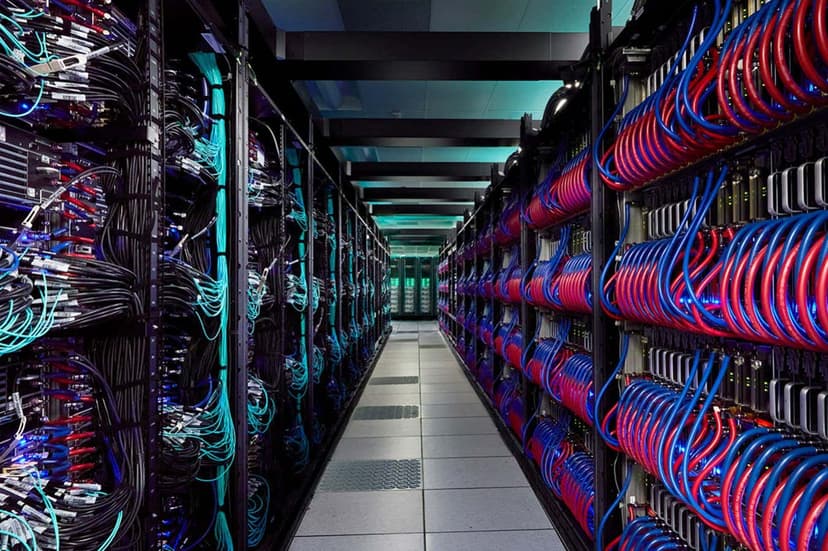
The pursuit of powerful fault-tolerant quantum computers (FTQCs) may lead to unprecedented energy demands, potentially dwarfing those of today's supercomputers. While current quantum machines are limited in qubit count and prone to errors, the path to utility-scale FTQCs presents a formidable engineering hurdle with various competing designs.

Olivier Ezratty's preliminary estimates, presented in December, reveal a broad spectrum of projected energy consumption for FTQCs, ranging from 100 kilowatts to as much as 200 megawatts for the most power-hungry designs. This is a stark contrast to the 20 megawatts used by the world's fastest supercomputer, El Capitan. The significant variation stems from differing qubit technologies, cooling requirements, and control systems.

Experts like Oliver Dial from IBM anticipate their large-scale FTQC will need just under 2 or 3 megawatts, a fraction of hyperscale AI data centers. However, the industry urgently needs to develop standards for reporting energy footprints. Ezratty's ongoing work at the Quantum Energy Initiative aims to better understand and ultimately reduce the energetic demands of these future computational giants.

Disclaimer: This story has been auto-aggregated and auto-summarised by a computer program. This story has not been edited or created by the Feedzop team.
Estimates for FTQCs range widely, from 100 kilowatts to potentially 200 megawatts, with some designs far exceeding current supercomputers.
Energy consumption differences arise from diverse qubit technologies, cooling systems, and control mechanisms used by various quantum computing firms.
The QEI is an international organization focused on understanding and advocating for reduced energy consumption in quantum computing development.

Read more news on

Technologyside-arrow
trending

Roblox CEO sells stock

trending

Tigers linked to Bassitt, Giolito

trending

Wawrinka gets Australian Open wildcard

trending

Ozark Trail stoves recalled

trending

Switzerland reaches United Cup final

trending

Hurkacz leads Poland to title

trending

Medvedev credits Aussie coach revival

trending

Adithya Ashok: New Zealand Squad

You may also like

Quantum Stocks: Boom to Bust in 2025?

30 Dec, 2025 • 55 reads

article image

Quantum Leap or Quantum Bust? QUBT's Bold Acquisition Move

25 Dec, 2025 • 64 reads

article image

Quantum Computing Surges: Billions Flow In

23 Dec, 2025 • 80 reads

article image

Earth to Orbit: Quantum Signal Breakthrough

17 Dec, 2025 • 60 reads

article image

Quantum Leap: D-Wave's Unique Path to AI's Future

14 Dec, 2025 • 76 reads

article image