Home / Technology / Nvidia's Halos System Secures Physical AI's Future
Nvidia's Halos System Secures Physical AI's Future
8 Oct
Summary
- Nvidia launched Halos system in 2025 for autonomous vehicles.
- Halos for Robotics expanded safety to warehouses and factories in June 2026.
- Agility Robotics and Boston Dynamics are early adopters of the system.
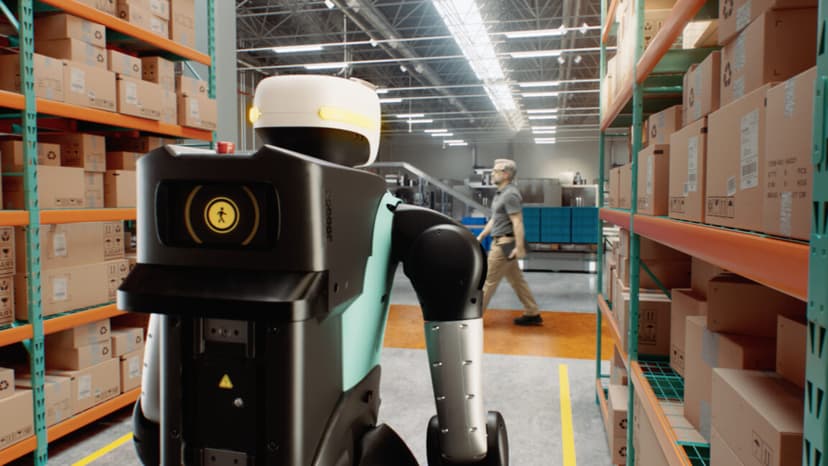
Nvidia's commitment to physical AI extends beyond its dominant chip market, with billions invested in robotics and autonomous vehicles. The company's Halos system, first introduced in 2025 for self-driving cars, has been enhanced and expanded to include robotics. Announced in June 2026, Nvidia Halos for Robotics provides a full-stack safety system designed to enable the secure deployment of autonomous mobile robots in warehouses, humanoid robots in factories, and surgical robots.
This safety architecture integrates hardware, such as the IGX Thor computing module with an independent safety processor, and software like the Halos operating system for continuous monitoring. The Nvidia Holoscan Sensor Bridge connects sensor data to safety processing, and simulations/inspection labs are provided for testing. This expansion comes as Nvidia's physical AI business reportedly generates nearly $10 billion annually, with CEO Jensen Huang highlighting it as a key growth area.
Adapting Halos for diverse robotic applications required reimagining safety definitions, as different robots (e.g., forklifts vs. humanoid robots) have unique operational risks. Agility Robotics' Digit 5 humanoid robot and Boston Dynamics' robots are among the early partners incorporating this safety technology. Nvidia aims for robots to operate safely and flexibly across multiple environments without extensive infrastructure changes, crucial for the next generation of generalized robotic workers.


