
Home / Technology / China-Made Robot, US Brain: The Future Bot?
China-Made Robot, US Brain: The Future Bot?
3 Jun
Summary
- Nvidia CEO announced a blueprint for a new humanoid robot.
- The bot combines a Chinese robot body with American AI chips.
- This collaboration aims to advance humanoid robot development globally.
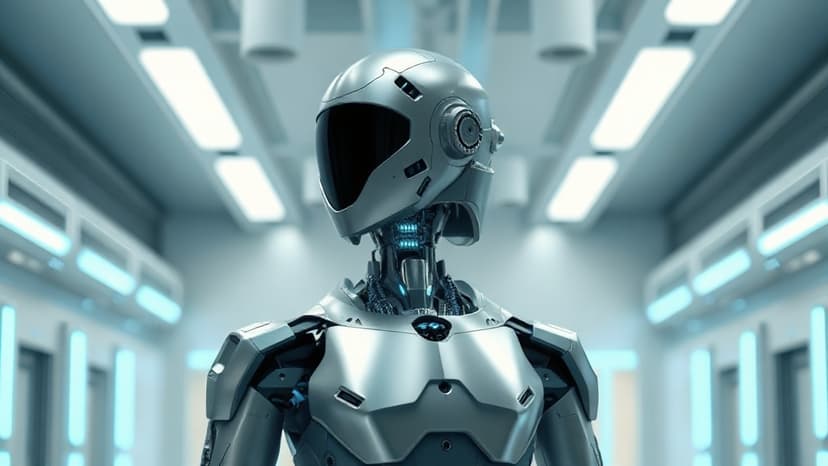
Nvidia CEO Jensen Huang has announced a blueprint for a future humanoid robot, which notably combines a Chinese-made robot body with advanced American silicon for its AI 'brain'. This new design integrates a 6-foot, 150-pound robot from Chinese startup Unitree, an Nvidia Thor T5000 chip, a dextrous humanoid hand from Singapore, and new software for easier programming and training.
The Thor chip enables powerful AI models for environmental awareness and movement control, while Unitree provides the physical components. This development aims to empower researchers, including those at US academic labs, to build and train sophisticated humanoids with their own AI algorithms. Despite ongoing US-China techno-competition, this partnership highlights a pragmatic approach to advancing robotics.
This collaboration is seen by experts as a significant development, acknowledging that while the US leads in AI chips, China possesses advantages in the robotics supply chain. Nvidia appears conscious of security concerns, incorporating features into the H2 Plus blueprint designed to ensure data and model safety. This move could also enhance the capabilities of other Chinese robots.
Unitree's robots are recognized for their affordability, ease of programming, and impressive capabilities, often seen performing acrobatic feats in videos and used in Western labs. The base version of their G1 humanoid costs approximately $15,000, a fraction of competitors' prices. Concerns exist about potential Chinese dominance in the robotics market, similar to the drone sector.
Nvidia's CEO views the partnership as a gateway to a multitrillion-dollar economic opportunity, bringing physical AI to major global industries. The company is actively developing specialized hardware and software tools to expand its presence in advanced robotics, aiming to provide its AI capabilities to numerous humanoid robot manufacturers.
