Home / Technology / Nvidia AI Drives Future of Robotic Characters
Nvidia AI Drives Future of Robotic Characters
17 Mar
Summary
- Nvidia's AI tech could power lifelike robotic characters at Disney World.
- New AI models enhance robot navigation and self-driving vehicle capabilities.
- Nvidia partners with Uber to launch autonomous vehicles in 28 cities by 2028.
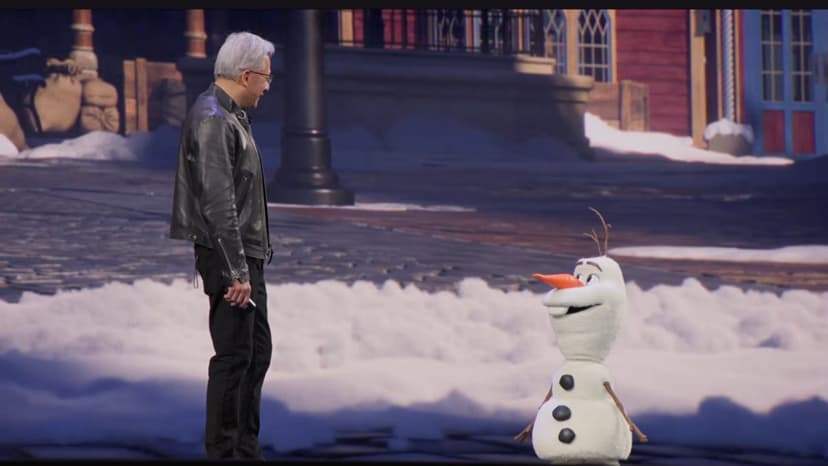
Nvidia is significantly advancing physical AI, enabling robots and vehicles to navigate the real world more effectively. CEO Jensen Huang demonstrated a robotic Olaf, hinting at future robotic characters at Disney parks powered by Nvidia's technology. The company released new foundation models, including Cosmos 3 for synthetic world generation, Isaac GR00T for humanoid robots, and Alpamayo 1.5 for enhanced autonomous vehicle navigation.
Nvidia is expanding its collaboration with Uber, aiming to deploy a fleet of autonomous vehicles across 28 cities globally by 2028, with initial launches in Los Angeles and San Francisco by 2027. This initiative leverages Nvidia's Drive AV software and Alpamayo open models. Several automakers, including BYD, Hyundai, Nissan, and Geely, are joining Nvidia's robotaxi program, focusing on Level 4 autonomous driving training.
Furthering physical AI capabilities, Nvidia is collaborating with T-Mobile and Nokia to boost AI performance via AI radio access network infrastructure, enabling faster data processing for edge AI applications. The company is also developing space-based AI computing with platforms like Vera Rubin, designed for orbital data centers and autonomous space operations. These advancements are supported by Nvidia's Physical AI Data Factory Blueprint, an architecture to streamline AI training data generation and evaluation.