Home / Technology / NJ Law: Driverless Cars Need More Than Cameras
NJ Law: Driverless Cars Need More Than Cameras
8 Jul
Summary
- New Jersey lawmakers are proposing a bill requiring autonomous vehicles to use lidar and radar.
- Tesla's camera-only approach would be prohibited from operating in the state under the bill.
- The legislation aims to enhance safety by mandating multiple sensor technologies for AVs.
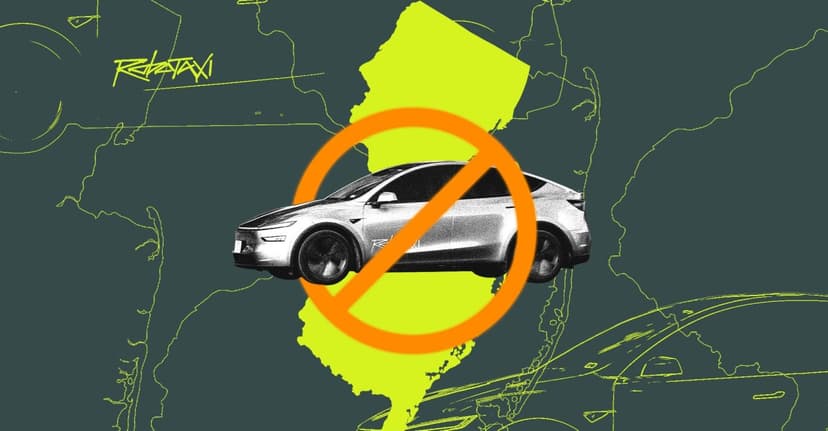
New Jersey lawmakers are considering a bill that would mandate specific sensor technology for fully autonomous vehicles operating within the state. The proposed legislation requires companies to utilize cameras alongside at least two additional sensing technologies, commonly lidar and radar. This measure, if enacted, would position New Jersey as the first state to codify such hardware requirements into law, impacting a nearly identical proposal in New York.
Senator Andrew Zwicker, the bill's sponsor, emphasizes that the legislation prioritizes safety and is not intended to be anti-Tesla. Tesla's approach, which relies on cameras and advanced AI, has been a significant investment, with Elon Musk arguing that additional sensors like lidar and radar can decrease safety by creating conflicting data for the AI. Most other autonomous vehicle developers, however, disagree, combining cameras with lidar and radar to leverage the unique strengths of each technology for greater redundancy and safety.
The bill establishes a three-year pilot program for testing and deploying autonomous vehicles. Companies must use multiple sensing technologies, report crashes, and complete 50,000 miles of supervised testing without a major incident before removing a human safety driver. This regulatory approach, focusing on hardware specifics, differs from the safety performance and oversight debates typical in other states.
Experts like Carnegie Mellon professor Philip Koopman support the bill but advocate for even stronger safeguards, such as the inclusion of conventional driving controls. He argues that camera-only systems, while improving, are not yet sufficient for broad consumer use in diverse conditions. Tesla is actively lobbying against the bill, asserting that it unfairly targets their technology and bans them from the New Jersey market.


