Home / Technology / Next-Gen HDR Erupts: Dolby vs. Samsung Showdown
Next-Gen HDR Erupts: Dolby vs. Samsung Showdown
3 Jan
Summary
- New HDR formats boast higher brightness and advanced tone mapping.
- Dolby Vision 2 supports 12-bit color and 10,000 nits peak brightness.
- HDR10+ Advanced offers open-source, royalty-free standard adoption.
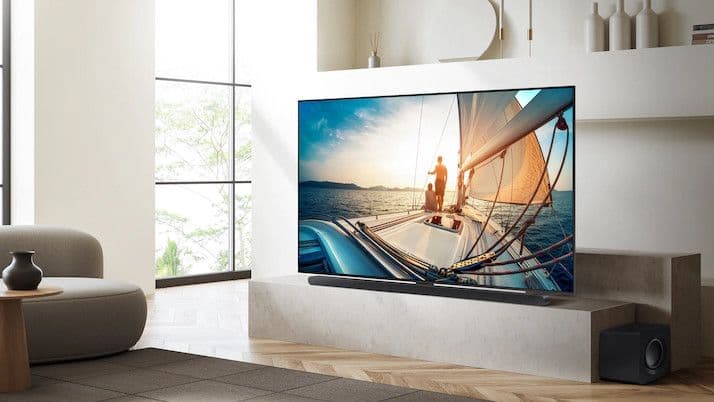
The landscape of High Dynamic Range (HDR) is set to transform with the impending arrival of Dolby Vision 2 and HDR10+ Advanced. These next-generation formats are engineered to support screens with superior brightness capabilities and employ more sophisticated tone mapping techniques, pushing visual fidelity to new heights. This evolution continues the competitive dynamic between Dolby and Samsung, key players in display technology.
Dolby Vision 2 advances its premium HDR standard by offering support for 12-bit color depth and a theoretical peak brightness of 10,000 nits, powered by an AI system called Content Intelligence for dynamic picture adaptation. It also features "Precision Black" for enhanced dark scene detail. Meanwhile, Samsung's HDR10+ Advanced is built on an open-source, royalty-free model, designed for TVs reaching 4,000 to 5,000 nits and offering granular control over brightness, color, and motion.
Key differences lie in their approaches to motion handling, metadata usage, and gaming optimization. Dolby Vision 2 emphasizes creator control over motion, while HDR10+ Advanced uses AI for dynamic motion smoothing and cloud gaming enhancements. Dolby Vision 2's proprietary nature may entail licensing fees, whereas HDR10+ Advanced's open standard aims for broader adoption. The competition is expected to drive innovation, with many future TVs likely supporting both formats.