Home / Technology / MIT's 90s Robot Vision Redefined AI
MIT's 90s Robot Vision Redefined AI
7 Mar
Summary
- MIT's 1995 Cog robot broke from 'brain in a box' AI.
- Cog focused on 'parallel behaviors' and sensor-driven routines.
- Brooks aimed to bridge HAL's boxed brain with Data's mind.
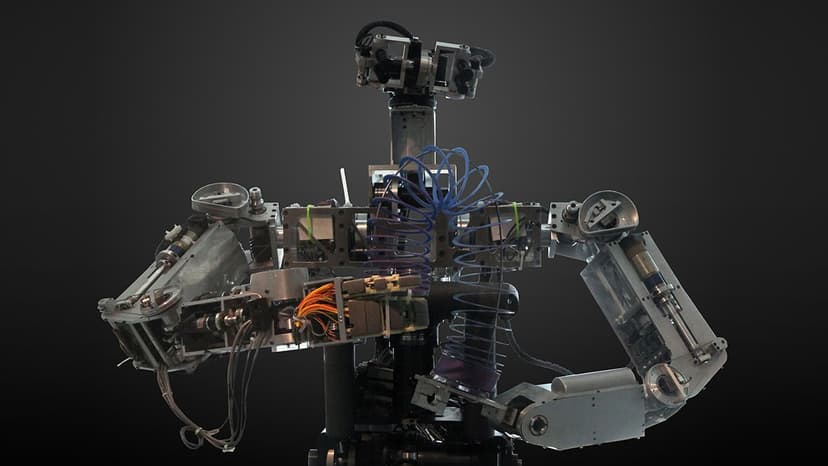
A pioneering 1995 MIT project, embodied by the Cog robot, shifted the paradigm of artificial intelligence beyond centralized computation. Influenced by early sci-fi and Alan Turing's ideas, researcher Rodney Brooks sought to create embodied intelligence, contrasting with the prevailing 'Good Old-Fashioned Artificial Intelligence' (GOFAI) approach. Cog utilized 'parallel behaviors' and sensor-driven routines, with intelligence derived from interaction with the world.
The Cog robot, though rudimentary by today's standards, incorporated advanced concepts like multi-camera vision and the potential for simulated sensations. Brooks' ambition was to bridge the gap between disembodied AI, exemplified by HAL 9000, and embodied AI, like Star Trek's Commander Data. This vision has profoundly influenced modern robotics.
Decades later, Brooks' emphasis on embodiment is evident in today's humanoids. Systems from Boston Dynamics, Tesla, and others heavily rely on real-time sensor fusion and learning through physical interaction. While AI capabilities have advanced significantly, the goal of creating robots that can truly 'wander around the countryside and experience what humans do' remains an ongoing pursuit.