
Home / Technology / Microsoft's Strategic Shift: Owning AI Models and Securing Workloads
Microsoft's Strategic Shift: Owning AI Models and Securing Workloads
6 Jun
Summary
- Microsoft unveils MAI-Thinking-1, a reasoning model emphasizing first-party AI stack ownership.
- Execution Containers enhance AI security by isolating processes and enforcing guardrails.
- Windows is evolving into a primary AI development and deployment platform for developers.
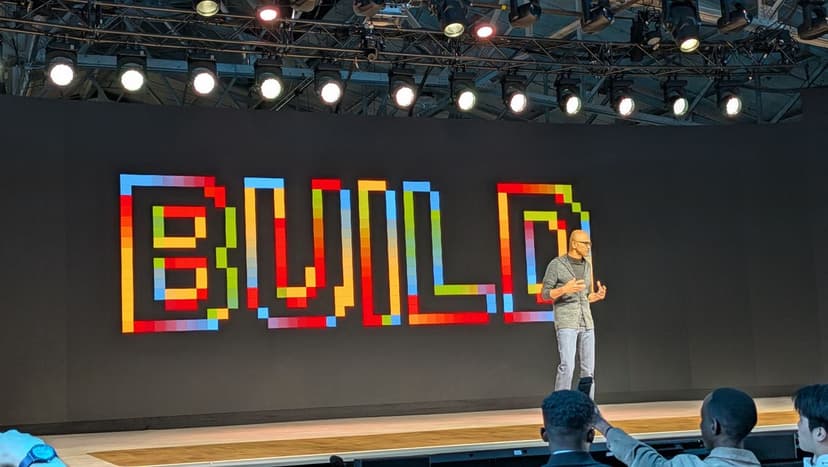
Microsoft's Build 2026 event, held recently, showcased significant advancements beyond headline AI agent announcements. The company introduced MAI-Thinking-1, a new 35-billion parameter reasoning model featuring a 128K context window. This strategic development signifies Microsoft's intent to control more of its AI infrastructure, optimizing models for its own ecosystem rather than relying solely on third-party solutions.
Security for AI workloads took center stage with the introduction of Microsoft Execution Containers (MXC). This new architecture aims to establish device-level guardrails, isolating AI processes and enforcing strict security boundaries. MXC is poised to be a foundational element for broader AI adoption, particularly in regulated industries requiring robust data access control and monitoring.
Windows is solidifying its role as a premier AI and developer platform. Microsoft detailed new capabilities for local AI infrastructure, enhanced support for running models across various hardware like CPUs, GPUs, and NPUs, and improved developer-centric tooling. These updates position Windows as a central environment for developing and deploying AI systems.
While AI dominated the discourse, Microsoft also provided an update on its quantum computing efforts. Progress on the Majorana 2 chip program demonstrated improved qubit accuracy, reinforcing Microsoft's long-term commitment to developing commercially viable quantum systems. This advancement underscores Microsoft's forward-looking strategy, exploring new computational architectures alongside current AI trends.
