Home / Technology / LiDAR Mowers: Ditch the Wires, Mow Smarter
LiDAR Mowers: Ditch the Wires, Mow Smarter
24 Jan
Summary
- LiDAR navigation eliminates need for boundary wires and RTK stations.
- New LiDAR robot mowers can map surroundings using light beams.
- LiDAR tech is expected to boost robot lawn mower adoption rates.
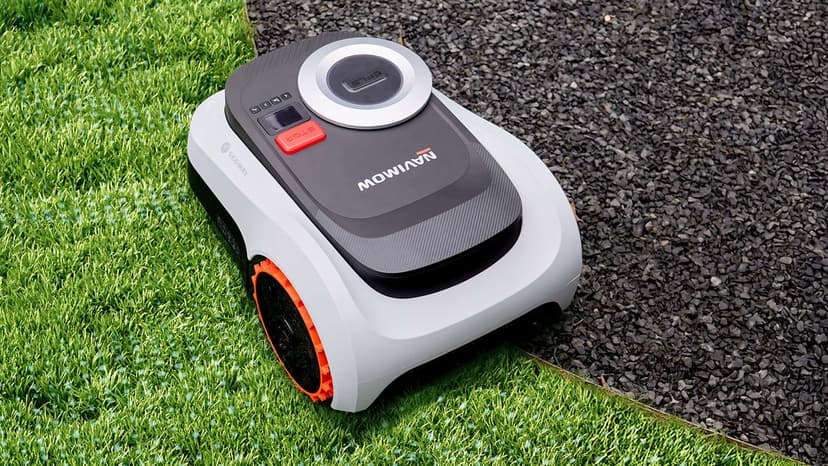
The landscape of robotic lawn care is poised for a significant transformation with the integration of LiDAR technology. This advanced navigation system, previously a staple in high-end robot vacuums, is now making its debut in a new generation of robot lawn mowers.
LiDAR operates by emitting light beams and measuring their reflection to create detailed 3D maps of outdoor spaces. This capability allows robot mowers to self-localize and map lawns without the cumbersome setup of boundary wires or the reliance on satellite signals. Brands such as Segway Navimow, Roborock, Mammotion, and Ecovacs are all exploring this innovation.
The primary advantage of LiDAR is its "drop and mow" potential, where users can unbox a mower and have it operate with minimal initial configuration. This is a significant leap from current models that often require precise wire installation or alignment of RTK stations. The technology's ability to "see" obstacles helps it navigate effectively, much like human landmark recognition.
Industry experts anticipate that this ease of use will dramatically accelerate the adoption of robot lawn mowers. By removing the setup complexities, LiDAR technology is expected to make robotic lawn care accessible to a wider consumer base. This simplification is seen as a crucial step in making the technology foolproof and worry-free for homeowners.
However, LiDAR is not a universal solution. It is best suited for smaller yards with varied obstacles. For large, open expanses, traditional satellite navigation remains more effective, as LiDAR beams require surfaces to bounce off. Some advanced mowers may even combine multiple navigation technologies to ensure optimal performance across diverse terrains and conditions.
The increasing availability and decreasing cost of LiDAR modules are key drivers behind their integration into lawn care robotics. Two types are emerging: mechanical LiDAR, offering a 360-degree view but potentially more exposed, and solid-state LiDAR, integrated more discreetly into the mower's body. The ultimate performance of each type is still under evaluation.