Home / Technology / India's EV Shift: Uneven Progress, Key Hurdles Ahead
India's EV Shift: Uneven Progress, Key Hurdles Ahead
19 Feb
Summary
- EV sales hit 6.7% in 2025, but adoption varies widely by vehicle type.
- Charging infrastructure lags, with one public station for every 235 EVs.
- Strong regional execution boosts EV penetration in some Indian states.
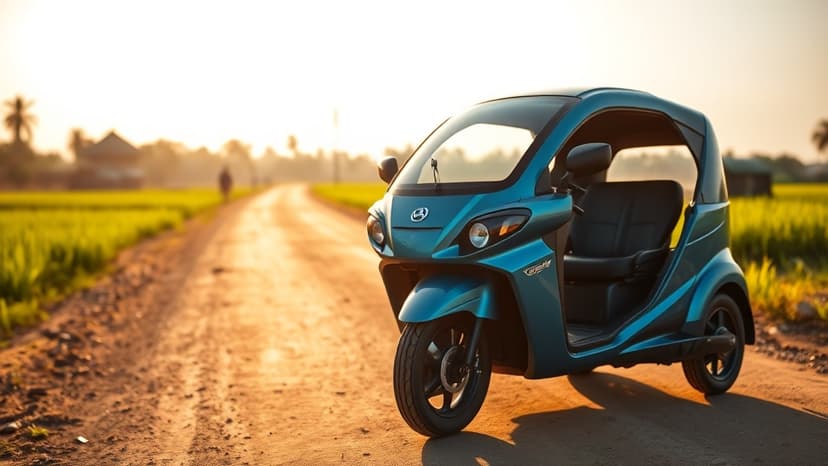
India's electric vehicle (EV) transition has seen measurable outcomes, though adoption is uneven across segments. By 2025, EVs represented 6.7% of total sales, with significant variations: 52% in commercial three-wheelers, 7% for buses, 4% for four-wheelers, and minimal for heavy commercial vehicles. This divergence stems from differences in policy support, infrastructure readiness, and operating economics.
Commercial three-wheelers have scaled rapidly due to lower total cost of ownership and high utilization. Buses achieved 7% penetration through government procurement programs. Two-wheelers benefit from simpler technology and smaller battery needs. However, private four-wheelers rely heavily on public charging, facing affordability and range anxiety due to inadequate infrastructure. By late 2025, over 29,000 public charging stations were installed, but only 8,800 were fast chargers, yielding a ratio of one station per 235 EVs.
Regional execution significantly impacts EV adoption. States with stronger implementation, complementing central incentives with faster infrastructure rollout and urban planning integration, achieved above-average penetration. Southern India, for instance, saw three-wheeler EV penetration ranging from 31% to over 70% in some states. Achieving national targets, such as 30% EV sales share by 2030, hinges on closing these execution gaps in lagging states.
The hardest segment to decarbonize is medium and heavy commercial vehicles, with near-zero clean mobility penetration nationally. Challenges include the lack of broadly adopted, commercially viable electric truck products for freight use cases and the absence of high-capacity charging infrastructure. Manufacturers are introducing light and medium electric truck models, but these are limited in scale and payload for heavy-duty transport.
The next phase of India's EV transition requires coordinated progress across four pillars: technology development, infrastructure creation, ecosystem strengthening, and fleet renewal. Success could create approximately 500,000 jobs by 2030 and save over $100 billion in oil imports by 2035. Industry investments are substantial, with manufacturers experimenting with business models to reduce upfront costs and signal production scale.