Home / Technology / Robotic Muscle: 3D Prints Bend and Twist on Command
Robotic Muscle: 3D Prints Bend and Twist on Command
16 Feb
Summary
- Engineers developed a 3D printing method for flexible robotic structures.
- The technique allows structures to twist, bend, or lift on demand.
- This innovation could reduce time and cost for creating robotic parts.
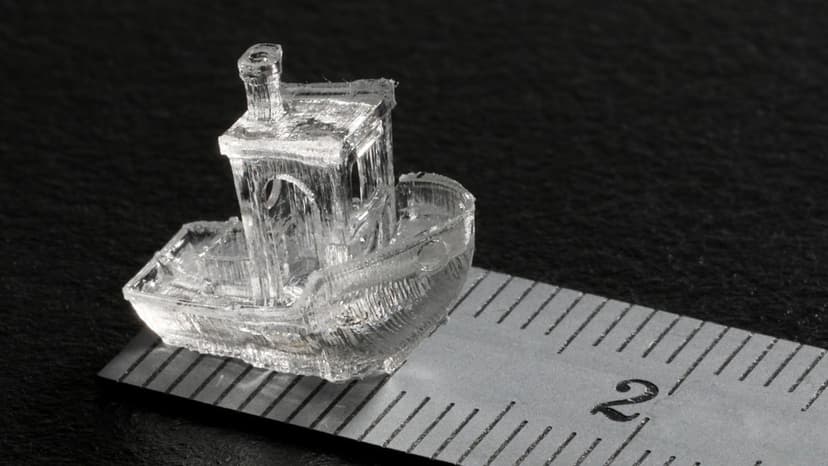
A groundbreaking 3D printing technique developed by Harvard engineers allows for the creation of fully flexible robotic structures capable of twisting, bending, and lifting on demand. This innovative method, dubbed rotational multi-material 3D printing, enables the simultaneous deposition of multiple materials through a single, continuously rotating nozzle.
The process precisely controls material interactions to produce hollow tubes. These tubes, protected by a durable polyurethane outer layer and containing an interior gel-polymer, act as functional actuators once the gel is removed. When inflated with air or fluid, these actuators can generate programmed movement, as demonstrated by a flower-like unfurling spiral and a functional robotic gripper.
This single-print approach eliminates the laborious layer-by-layer assembly of traditional soft robotics, integrating movement logic directly into the material. While the potential applications are vast, ranging from prosthetics to underwater construction, concerns linger regarding safety, ethical use, and the acceleration of job displacement in industrial settings due to widespread adoption of such adaptable robots.