Home / Technology / Google's Nano Banana 2: Cheaper AI Images, No Quality Loss
Google's Nano Banana 2: Cheaper AI Images, No Quality Loss
26 Feb
Summary
- Nano Banana 2 offers Pro-tier quality at Flash-tier pricing.
- New model excels in text rendering and translation within images.
- Alibaba's Qwen-Image-2.0 offers a competitive open-weight alternative.
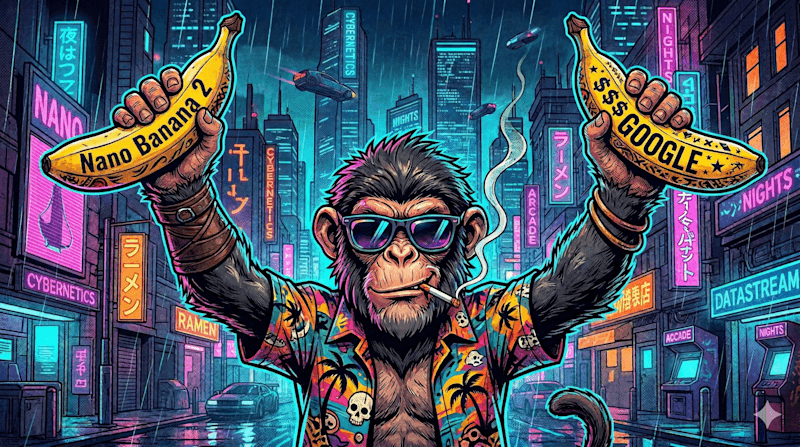
Google DeepMind has launched Nano Banana 2, formally Gemini 3.1 Flash Image, aiming to bridge the gap between high-quality and affordable AI image generation. For the past six months, businesses had to choose between expensive, high-fidelity models like the original Nano Banana Pro or cheaper, less capable alternatives. Nano Banana 2 now offers the Pro tier's reasoning and creative control at Flash-level speed and pricing.
This release follows Alibaba's Qwen-Image-2.0, an open-weight model that also offered comparable quality to Nano Banana Pro at a lower inference cost. For IT leaders, Nano Banana 2 shifts the focus from AI model capability to cost-effectiveness for production workflows. The original Nano Banana Pro, released in November 2025, impressed with its visual fidelity and reasoning but came with a premium price of $0.134 per 1K image.
Nano Banana 2 dramatically undercuts this, priced at approximately $0.067 per 1K image, representing a 50% cost reduction. Beyond price, the new model enhances text rendering and translation within images, significantly improves subject consistency for up to five characters and 14 reference objects, and includes an image search tool. These features bolster its utility for applications requiring visual continuity and reference materials.
The competitive landscape intensified on February 10 with Alibaba's Qwen-Image-2.0. This model, with its 7-billion parameter count, offers lower self-hosting costs and a unified generation-and-editing architecture, simplifying deployment. While Qwen-Image-2.0 presents a compelling option for those prioritizing cost and open-weight availability, Google's Nano Banana 2 benefits from extensive ecosystem integration across Google's platforms.
Furthermore, Nano Banana 2 incorporates essential provenance tooling like SynthID watermarking and C2PA Content Credentials, addressing enterprise needs for AI-generated content identification and authenticity. This compliance feature is currently not natively provided by self-hosted open-weight alternatives. Google's strategy with Nano Banana 2 focuses on making AI image generation a production-ready infrastructure component, betting that speed and cost-effectiveness at scale will drive future adoption.