

Home / Technology / Robots Rise: Europe Competes in Humanoid Race
Robots Rise: Europe Competes in Humanoid Race
1 Apr
Summary
- European firms like Hexagon AB and Neura Robotics are key players in humanoid robot development.
- Humanoid robots share components with electric cars, promising growth for the auto industry.
- The market for AI-powered robots could reach a trillion-dollar opportunity by 2035.
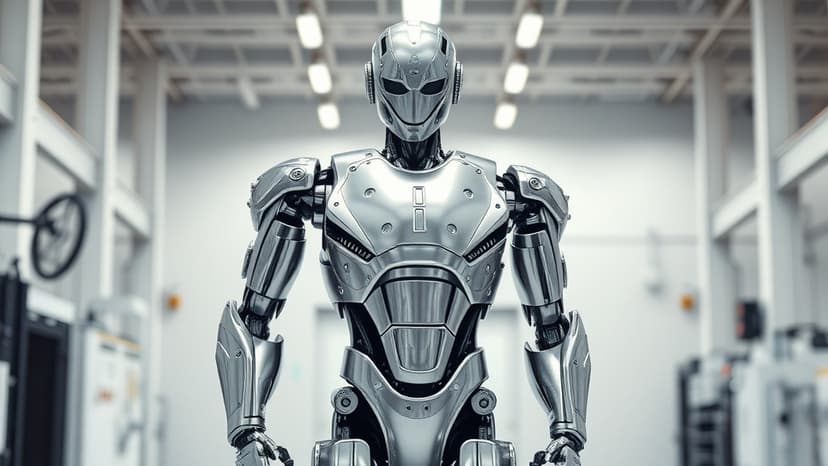
Europe is emerging as a significant contender in the global humanoid robot race, a field where it has historically lagged in other AI sectors. Swedish firm Hexagon AB is testing its Aeon humanoid robot with industrial clients like BMW AG, aiming for full commercialization by 2026. Meanwhile, Germany's Neura Robotics GmbH recently secured substantial investment, valuing the startup at €4 billion. Automotive suppliers such as Schaeffler AG and Robert Bosch GmbH are also investing heavily in this nascent market.
The development of humanoid robots is a natural extension for the automotive industry, as they share numerous components with electric cars, including batteries, motors, sensors, and AI software. This synergy presents a crucial growth opportunity for an industry facing market challenges. Experts predict the AI-powered robot market could expand into a trillion-dollar sector by 2035, signaling a new industrial revolution.
Despite the rapid advancements, challenges remain in making these robots fully autonomous and reliable in unpredictable environments. Balancing on two feet and servicing these complex machines still pose significant hurdles. However, companies are pushing forward, with Hexagon anticipating "a few thousand" Aeon robots by 2030 and BMW integrating them into battery assembly lines. China is also a major competitor, with numerous companies focusing on embodied AI.
European suppliers are strategically diversifying their approach. Schaeffler AG, for instance, has invested in German and Chinese robotics firms and partnered with US companies. This broad strategy aims to capitalize on the expected ramp-up in humanoid robot deployment, with projections suggesting widespread adoption within the next five to ten years, despite potential early setbacks.
