


Home / Technology / Virtual Fly Mimics Real Brain, Sparks Consciousness Debate
Virtual Fly Mimics Real Brain, Sparks Consciousness Debate
16 Apr
Summary
- A startup created a virtual fly using a digital fruit fly connectome.
- The AI replicates neuronal pathways with 95% accuracy.
- This breakthrough raises questions about simulating consciousness.
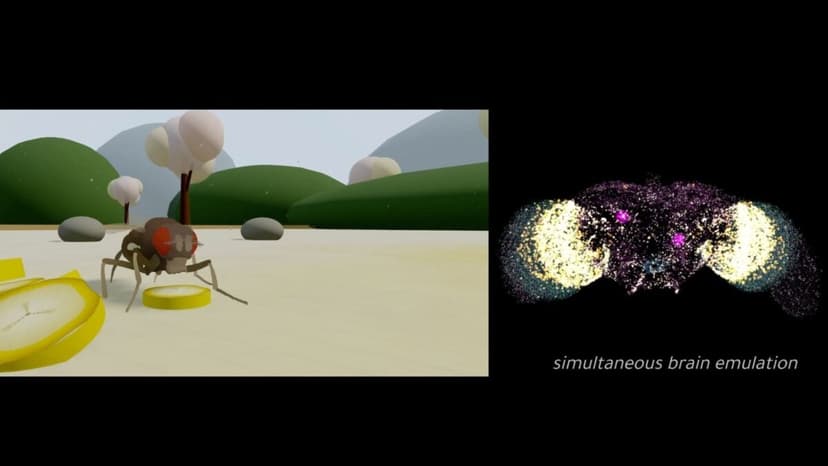
A San Francisco startup, Eon Systems, has achieved a significant breakthrough by creating a virtual fly powered by a digital replica of a complete fruit fly connectome. This digital brain, comprising 125,000 neurons and 50 million synaptic connections, is reportedly matched to actual fruit fly brain activity with 95% accuracy by an AI algorithm. Eon views this as an early step towards mind uploading, arguing that accurately simulating a brain constitutes a digital twin.
The company's ultimate ambition is to perfectly simulate the human brain, believing a faithful digital reproduction would inherently possess consciousness. This aligns with transhumanist goals of transcending biological limitations. However, prominent neuroscientists express skepticism, likening the inference of consciousness from simulation to a computer simulation of rain making the computer wet.
Eon Systems plans to next simulate a mouse's connectome within two years, a feat that has challenged researchers for nearly a decade. While simulating animal brains could accelerate medical science by identifying and fixing 'glitches' as software, the broader goal of simulating human consciousness is viewed as a distant and philosophically complex endeavor.
