Home / Technology / Slovenian Startup Elaphe Fuels In-Wheel Motor Innovation
Slovenian Startup Elaphe Fuels In-Wheel Motor Innovation
23 Mar
Summary
- Elaphe's in-wheel motors offer enhanced EV performance and control.
- Prototypes demonstrated superior handling and drift capabilities on ice.
- Future vehicles with Elaphe motors expected within a few years.

Ferdinand Porsche and lunar missions highlight the long history of in-wheel electric motors, a technology that never achieved widespread adoption until now. Though Lordstown Motors' Endurance truck, which utilized motors from Slovenian company Elaphe, failed to reach the market, Elaphe continues to innovate. The company's CEO, Gorazd Gotovac, views the Lordstown project as a valuable learning experience, with homologation efforts contributing to future product development.
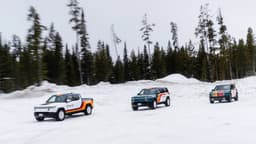
Testing Elaphe's technology on an ice track revealed significant advantages. A standard Hyundai Ioniq 5, equipped with Elaphe's four 188 hp in-wheel motors, demonstrated superior agility and control compared to its stock counterpart. Elaphe's system allows for precise power modulation and regenerative braking at each wheel, enabling dynamic handling adjustments and a specialized drift mode that transforms the driving experience.
Further testing involved a V8 American muscle car retrofitted with Elaphe's in-wheel motors and a battery pack. This hybrid prototype showcased how the technology can enhance performance even in conventionally powered vehicles. Gotovac notes that purpose-built EVs using this technology could be lighter and cheaper by eliminating traditional drivetrain components, though unsprung weight remains a consideration Elaphe's motors can help mitigate.
Elaphe is collaborating with multiple original equipment manufacturers, particularly those focused on performance vehicles, with initial product launches anticipated within the next few years. Following hybrid applications, more ambitious all-electric performance EVs are planned for deployment after 2030. The company's recent demonstrations in Sweden suggest a promising future for in-wheel motor technology, offering a glimpse into potentially supernatural grip and handling capabilities.