Home / Technology / From NASA to Your Phone: The CMOS Revolution
From NASA to Your Phone: The CMOS Revolution
13 Sep
Summary
- CMOS image sensor inventor fears societal impact on privacy.
- Camera-on-a-chip technology originated from NASA's space missions.
- Modern cameras, including smartphones, utilize CMOS image sensor tech.
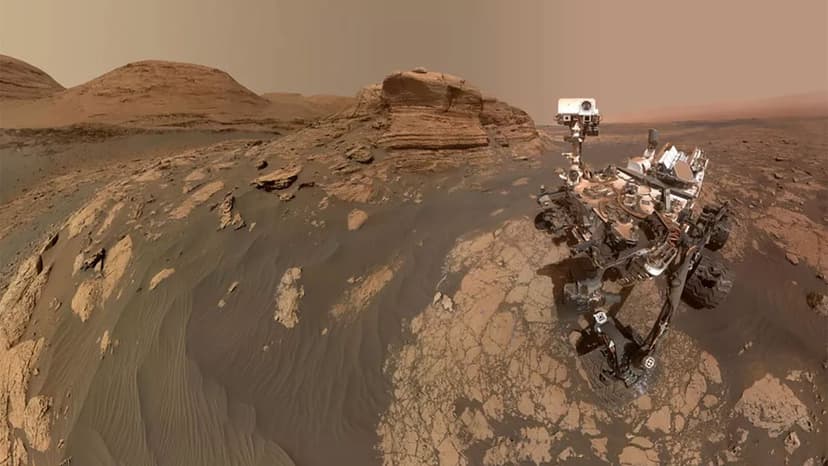
The invention of the CMOS image sensor, dubbed the 'camera-on-a-chip,' has profoundly reshaped global communication and technology. Dr. Eric Fossum, its creator, initially envisioned its widespread adoption but now harbors concerns about its societal implications, particularly regarding privacy.
This technology traces its roots to NASA's Jet Propulsion Laboratory (JPL) in the 1960s, driven by the need for small, low-power, high-resolution cameras for interplanetary missions. Prior to CMOS, photography relied on film or less efficient Charge-Coupled Devices (CCDs).
CMOS sensors improved upon CCDs by enabling each pixel to have its own amplifier, significantly reducing power consumption and heat. This innovation underpins most modern cameras, from smartphones and doorbells to advanced driver-assistance systems and ongoing space exploration.
Dr. Fossum's current research at Dartmouth focuses on the Quanta Image Sensor (QIS), which aims to discern individual photons. Meanwhile, the future of consumer sensors may involve 3D integration and on-chip processing for enhanced image capture and analysis.
While acknowledging the transformative power of AI tools like Co-Pilot for information gathering, Dr. Fossum emphasizes the need for critical consideration of data sharing and privacy with AI giants.


