Home / Technology / China Challenges Hollywood's Cinema Standards
China Challenges Hollywood's Cinema Standards
15 Jun
Summary
- China promotes its HDR Vivid standard as a DCI alternative.
- Self-reliance in tech is a lesson from the US-China trade war.
- Only 270 of China's 93,000 screens use LED technology.
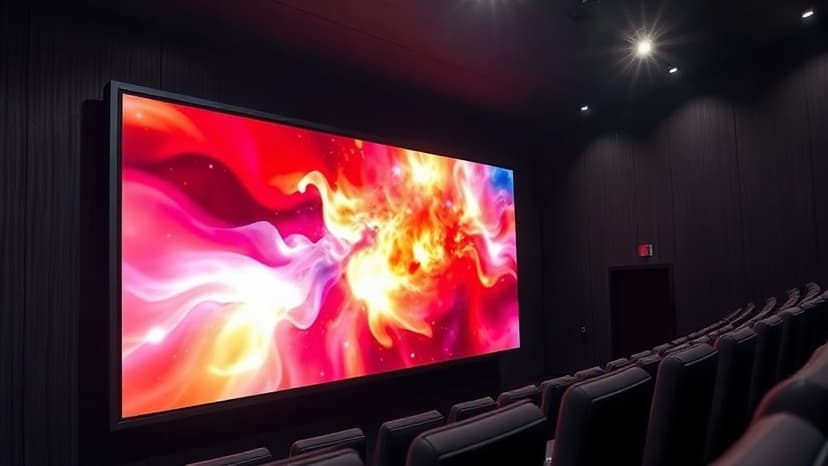
Chinese technology companies and cinema exhibitors are actively promoting High Dynamic Range (HDR) LED screens as a solution for a struggling domestic box office and a means to contest America's global influence on cinema standards.
Huawei, through its Ultra HD Video Alliance, is championing its HDR Vivid standard, presenting it as a free alternative to the established Digital Cinema Initiatives (DCI) certification. This initiative aims to lessen dependency on Hollywood films and reduce fees paid to the United States for hardware and content.
The drive for technological independence was significantly influenced by the US-China trade war, particularly Huawei's sanctions in 2019. This event highlighted the vulnerabilities of relying on foreign-controlled software and technology.
Panellists at the Shanghai International Film Festival argued that HDR Vivid surpasses DCI on technical merits like frame rates, brightness, and contrast. While China manufactures most of the world's LED screen technology, its implementation in domestic cinemas is limited.
Currently, only about 270 of China's roughly 93,000 cinema screens are LED, primarily in major cities. Projections estimate this figure might reach around 1,000 by the end of 2027, a modest increase against a backdrop of a box office performance significantly below previous years.
Separately, the Beijing Film Academy is set to launch a new major in "Intelligent Imagery," integrating cinematography with AI. This new program will accept its first students next year, with a revised admissions process that omits traditional art entrance exams.


