Home / Technology / China's AI Data Centers Thrive Amid Water Scarcity
China's AI Data Centers Thrive Amid Water Scarcity
22 Aug
Summary
- Ulanqab sees massive AI data center growth since 2016.
- Cold climate and cheap energy attract AI infrastructure.
- Water scarcity poses a significant environmental challenge.
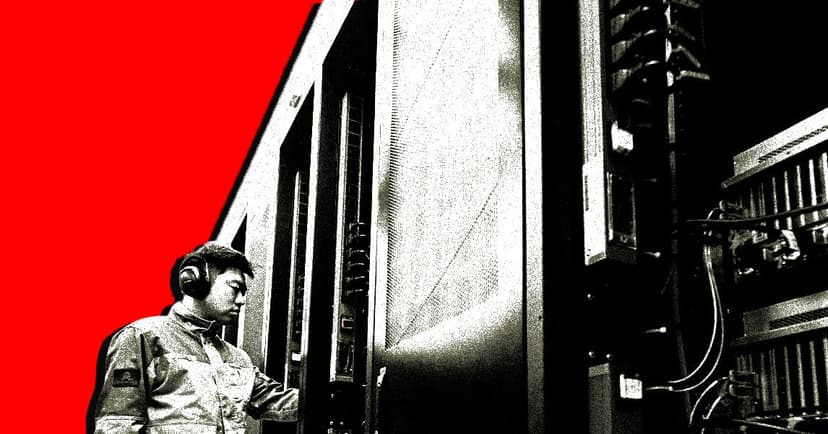
The vast, arid lands of Inner Mongolia, once known for sheep farming and coal mining, have transformed into a leading location for AI data centers in China. Ulanqab, a city in the region, has witnessed the establishment or construction of nearly 100 data centers since 2016, with massive capacity commitments recently announced. Chinese AI firms like DeepSeek, ByteDance, and Alibaba are investing heavily in their own infrastructure, a shift from previous reliance on cloud rentals.
Several factors drive this growth: Ulanqab's high elevation and cold winters reduce cooling energy needs, while its proximity to Beijing ensures low data transmission latency. Abundant wind, solar, and coal power contribute to the region's significantly lower electricity costs compared to other parts of China. This boom signals Chinese AI companies are finally developing substantial physical infrastructure.
However, a critical challenge looms: water scarcity. Ulanqab faces annual rainfall similar to Denver, and the local government is already struggling to meet resident water demands. Planned data center expansion exacerbates this issue, potentially straining local resources despite lower winter water requirements for cooling.
Inner Mongolia has been a data center location for over a decade, part of China's "Eastern Data, Western Compute" initiative. Initially, high latency was a concern for remote centers, but the rise of AI in 2022 created a new purpose for model training, where latency is less critical. Improved fiber optics have since reduced latency, supporting real-time AI inference.
The government views this development positively, as it helps absorb excess renewable energy capacity. Companies like Envision are building AI data centers directly connected to clean power sources. Despite this, a significant portion of electricity in Ulanqab still relies on coal, and the transition to renewables is ongoing, though the pace remains uncertain. Some experts predict a near-complete renewable energy supply within three years.


