Home / Technology / China's Supersonic Jet Breaks Sound Barrier
China's Supersonic Jet Breaks Sound Barrier
22 Sep
Summary
- China is testing an experimental supersonic aircraft called TMS-10.
- The aircraft aims to reach Mach 2, twice the speed of sound.
- NASA is also developing a quiet supersonic jet, the X-59.
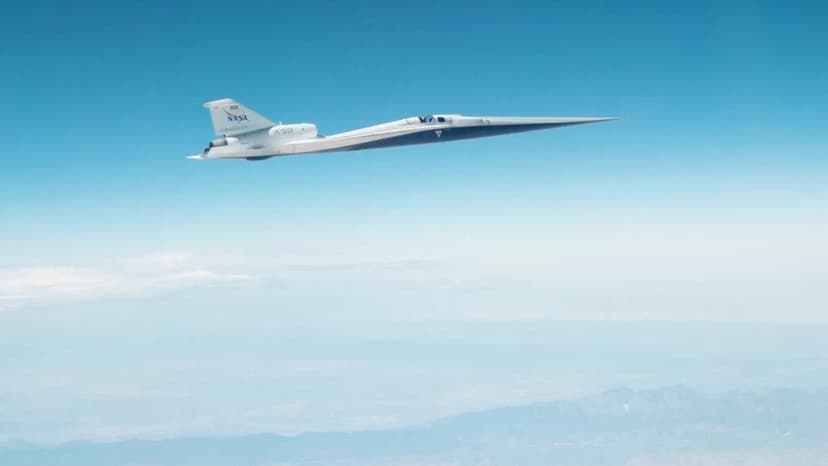
China's Tianmushan Laboratory is in the final assembly phase for its experimental supersonic passenger aircraft, the TMS-10, with a test flight anticipated by the end of 2026. This demonstrator vehicle is designed to achieve cruise speeds of Mach 2, or approximately 1,534 miles per hour, and aims to significantly reduce sonic booms.
The TMS-10 employs a unique design to dissipate shock waves, preventing them from merging into a powerful boom. This technology is intended to pave the way for a future 10- to 15-passenger jet capable of drastically cutting travel times, such as a Beijing to Shanghai trip in about 30 minutes.
In parallel, NASA is advancing its X-59 quiet supersonic jet, which has already undergone flight tests, including breaking the sound barrier at Mach 1.4. The X-59 is undergoing acoustic validation to measure its sonic thumps, with the goal of enabling supersonic flight over land, potentially overturning a decades-old ban.
Both China's TMS-10 and NASA's X-59 represent significant steps toward potentially reviving high-speed air travel, though challenges remain for commercial viability, including passenger durability and operational costs.


