Home / Technology / Balcony Solar Powers Up Europe, US Lags Behind
Balcony Solar Powers Up Europe, US Lags Behind
28 Feb
Summary
- Europe sees widespread adoption of plug-in balcony solar power.
- US regulations require complex utility interconnection paperwork.
- New US state laws aim to simplify small solar installations.
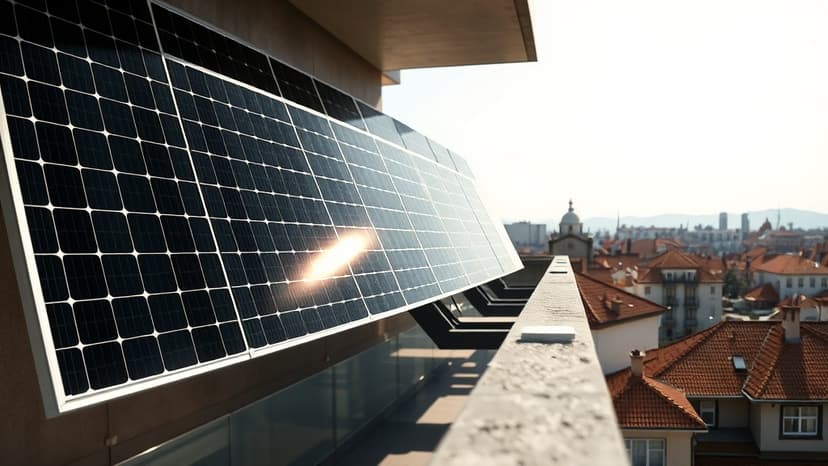
Balcony solar, also known as plug-in solar, has become a widespread trend in Europe. This surge is attributed to deregulated policies, increased energy expenses following the Ukraine conflict, and the availability of easy-to-install kits. These systems, featuring a solar panel and a microinverter, convert DC power to AC for home use. Some setups include batteries for nighttime power storage.
These balcony solar solutions are significantly cheaper than traditional rooftop installations, allowing consumers to recover costs within a few years. In Germany alone, over one million households had registered these installations by June 2025. Manufacturers are responding to this demand with affordable DIY kits, some starting around €1,197.
However, the United States lags behind due to stringent regulations that mandate utility interconnection paperwork and electrician involvement for nearly all home solar installations. While European vendors offer simple plug-in kits, US versions are often adapted to battery storage or separate structures. Advocates criticize this disparity, urging the US to adopt similar creative solutions.
Efforts are underway in the US to ease these restrictions. States like Utah have passed laws exempting solar installations below 1,200 watts from utility approval. California and Virginia are considering similar legislation for "portable solar generation devices" and "qualifying plug-in solar systems" that meet safety certifications from bodies like Underwriters Laboratories (UL).
UL Solutions has introduced UL 3700, a certification program for plug-in solar hardware, to ensure safety and prevent harm to home electrical systems. While current systems tested did not pass, the program aims to facilitate the development of safe, user-friendly plug-in solar options that could eventually emulate the European model of easy installation and self-consumption.