Home / Technology / AI Hype Echoes 1985 Warnings
AI Hype Echoes 1985 Warnings
15 Feb
Summary
- Mitch Kapor foresaw AI hype in 1985, calling it a 'lemming-like rush'.
- Early AI concerns mirrored today's debates on hype and abuse.
- Microsoft's 'softer software' concept foreshadowed modern AI copilots.
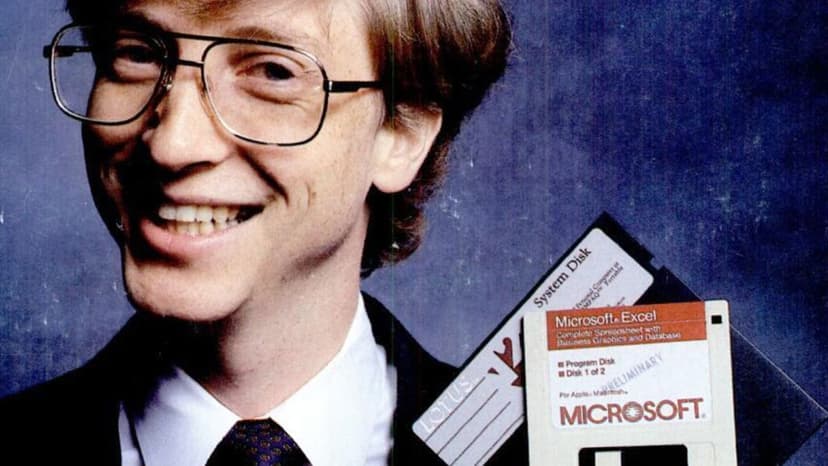
As of February 15, 2026, artificial intelligence is ubiquitous, powering everything from code generation to customer support. This widespread integration prompts a look back to 1985, when observers like Mitch Kapor of Lotus Development predicted AI would be a significant, albeit potentially 'despised,' software concept. He anticipated a "lemming-like rush" towards AI, seeing it as a perverse opportunity for customer-focused innovation.
An editorial from February 25, 1985, in InfoWorld, titled "Awaiting AI Hype, Promise," questioned AI's practical emergence from academia. The author, James E. Fawcette, highlighted the barrier the term "artificial intelligence" presented, conjuring "Big Brother images." He identified "AI-hype" as promising to make decisions for users and warned against "Rube Goldberg overdesign syndrome," concerns still relevant in 2026.
Around the same period, Microsoft's Bill Gates and Charles Simonyi discussed "softer software." This concept, detailed in an August 29, 1983, InfoWorld piece, described systems that empirically modify behavior based on user experience to ease real-world tasks. Simonyi, a key architect behind Word and Excel, envisioned computers as "working partners" anticipating user needs.
This vision of adaptive software, akin to today's personalization engines and copilots, was radical in 1983. Microsoft's "expert systems" for Multiplan in 1985 were early steps. By May 27, 1985, Excel's "learn-by-example" macro feature on the Macintosh was lauded as a move towards this "softer software" dream, allowing users to automate tasks without deep programming knowledge.
While Lotus 1-2-3 and its suite Jazz competed, Microsoft focused on integrated functionality, a philosophy that led to Excel's success over Jazz. The ability to generate reports and charts from simple prompts, once speculative in 1985, is now routine. Gates's focus was not on rejecting intelligence, but on demystifying it, promoting adaptable, partnership-oriented software over oracular systems.