Home / Technology / AI's Next Leap: Understanding the Physical World
AI's Next Leap: Understanding the Physical World
8 Jan
Summary
- World models translate the physical world into digital blueprints for AI.
- This technology aims to create realistic videos and guide robots.
- Industry leaders like Nvidia and AI pioneers are investing in this shift.
Artificial intelligence is poised for a significant transformation, shifting focus from language models to "world models." These advanced systems are designed to interpret and digitize our physical environment, including the laws of physics and object dynamics. This foundational technology is crucial for developing "physical AI," capable of not only comprehending but also acting within the real world.
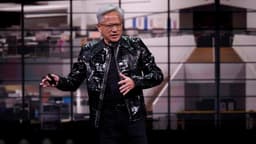
Key figures in AI, such as Yann LeCun and Fei Fei Li, have highlighted the importance of spatial intelligence and world models as the next frontier. Nvidia's CEO, Jensen Huang, has also emphasized the company's commitment to this area, underscoring the need for data grounded in real-world physics for training these models effectively.
Nvidia is already demonstrating the power of world models, such as its Cosmos system for self-driving cars, which uses sensor data to create a live, comprehensive view of surroundings. This technology promises to enhance safety by simulating scenarios and improving AI's ability to navigate reality accurately.