Home / Technology / AI Revolutionizes Traditional Medicine
AI Revolutionizes Traditional Medicine
19 Oct
Summary
- AI enhances traditional medicine accessibility and research.
- Over 3,000 AI-related traditional medicine patents filed globally.
- AI aids in diagnosis, plant identification, and research.
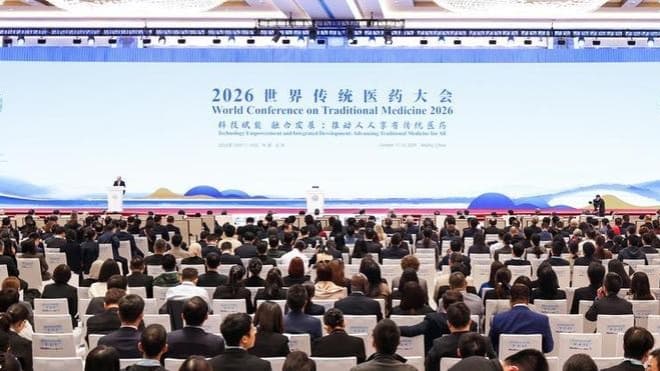
Artificial intelligence is rapidly enhancing traditional medicine, increasing its accessibility, standardization, and research base. This integration was highlighted at the 2026 World Conference on Traditional Medicine in Beijing, where a report detailed AI's global impact.
AI tools are vital for converting centuries-old wisdom into quantifiable data. Since 2000, over 3,000 AI-related traditional medicine patents have been published globally, with China accounting for a significant portion. This technology aids in clinical diagnosis, such as AI-assisted tongue analysis achieving 85-92% accuracy for certain syndromes.
Beyond diagnosis, AI is applied to digitalize medicinal plant cultivation and supply chains, accelerate drug screening, and advance fundamental research into concepts like meridians. Deep learning is even being used to observe immune cell dynamics following electroacupuncture, offering new insights into acupuncture's effects.
While AI-powered traditional medicine is developing rapidly, challenges remain. Uneven digital capabilities globally, language barriers, and the need for clearer explanations of medical mechanisms require further attention. Establishing unified regulatory frameworks for AI-assisted traditional medicine is also crucial for its continued advancement.


