Home / Technology / AI Robots Learn, Work, and Adapt Faster Than Ever
AI Robots Learn, Work, and Adapt Faster Than Ever
20 Jan
Summary
- Robots evolve from deterministic machines to adaptive learners.
- AI allows robots to perform varied, complex tasks in dynamic environments.
- Cloud computing and accessible tech lower AI robot deployment costs.
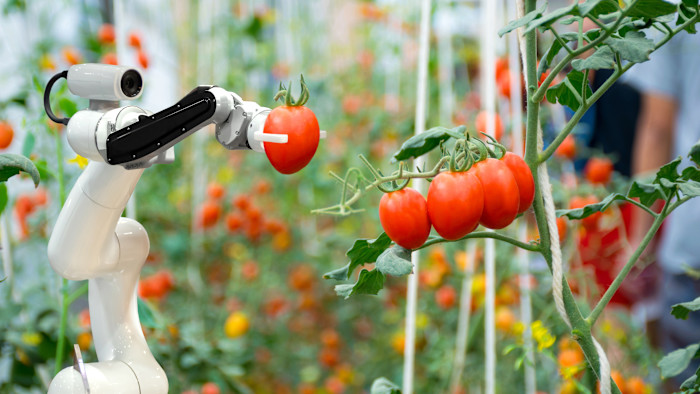
The field of artificial intelligence is rapidly integrating with physical robots, moving beyond fixed, repetitive tasks. Over 4.7 million industrial robots were operational in 2024, with annual growth exceeding 500,000 units. These evolving robots now possess autonomy and hardware to manipulate objects, using sensors to perceive their surroundings.
Robots are learning through observation and trial-and-error, with some now requiring only a single demonstration for a task. They are transitioning from "high-volume, low-variation" environments to dynamic, "high-variation, low-volume" settings. This shift makes their deployment viable for smaller-scale and more complex operations.
Improvements in soft materials, precision motors, and training methods, coupled with accessible processing power and cloud computing, are lowering the cost of advanced AI robots. Intuitive interfaces and natural language communication further simplify deployment, prompting companies to redesign workflows for maximum advantage.
While rule-based and training-based systems have limitations, context-based robots leverage generalist foundation models for more flexible responses. These robots can interpret varied inputs and adapt to new situations, though challenges remain in data collection and simulating real-world complexity.
Geographically, Asia, led by China, is a major driver of robot adoption, accounting for 54% of new installations in 2024. Sectors like healthcare are also showing significant growth, with robots assisting in rehabilitation, diagnostics, and elder care.
Despite concerns about job displacement, AI-enabled robots are filling workforce gaps and preventing injuries by assisting humans. The nature of jobs is evolving, with a greater need for technical skills in operating and maintaining robots, rather than purely manual labor.